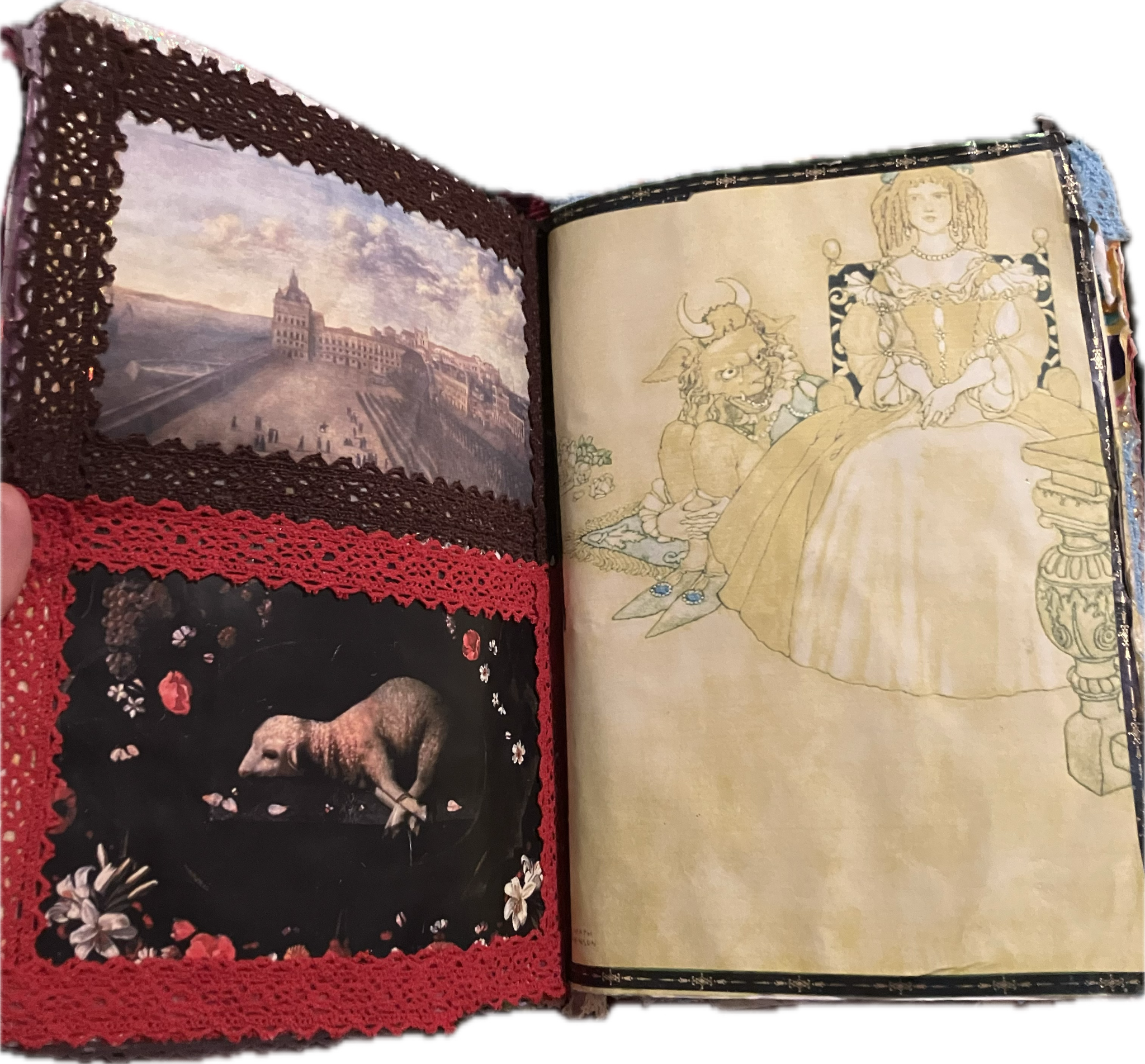
The pages that explore personal sacrifice were a tad bit emotional for me. The top left picture shows Portugal’s grand send off of their infanta to England to become England’s Queen. (I think the artist is Dirk Stoop?) It’s a celebratory moment, but a young woman is still leaving the home she loves.
She was a sacrifice. That’s why the bottom picture is Josefa de Obidos’ painting, The Sacrificial Lamb. (More background on that painting in a future post.)
The right page is an illustration by W. Heath Robinson (1872-1844). (His actual painting is more vibrant, but my printer had low ink levels!)
Thoughts about Beauty and the Beast and Music
The Beauty and the Beast with the familiar French story motifs came into existence in 1740 by Gabrielle Suzanne Barbot de Villeneuve, and then an abridged version by Jeanne-Marie Leprince de Beaumont was published in 1756. But similar fairytale stores stories existed long before the 18th century.
The woman given to a man she never met before is “a tale as old as time” that is actually a straight up fact more than a cliche.
I’ve concluded that these tales have been around for thousands of years not only because the magical and romantic appeal, but because they served an educational purpose: to prepare their daughters to marry strangers for the sake of the family. And for the sake of lands, kingdoms, and countless people who were depending on the marriage for their lives. And I hope the sons listened carefully-make sure you treat your wife kindly, or you might be in danger of losing your life!
I’m not sure if Catherine or Charles heard of these types of tales, but I crazy speculate that if she heard the Broadway soundtrack of Beauty and the Beast, she would have turned up the volume of “Home” (a defiant song Belle sings after she becomes the Beast’s prisoner). Catherine was forced to accept her husband’s mistresses. In the very early days of the marriage, she loudly fought against it. I could see her blasting the song then-and maybe here and there throughout the royal union.
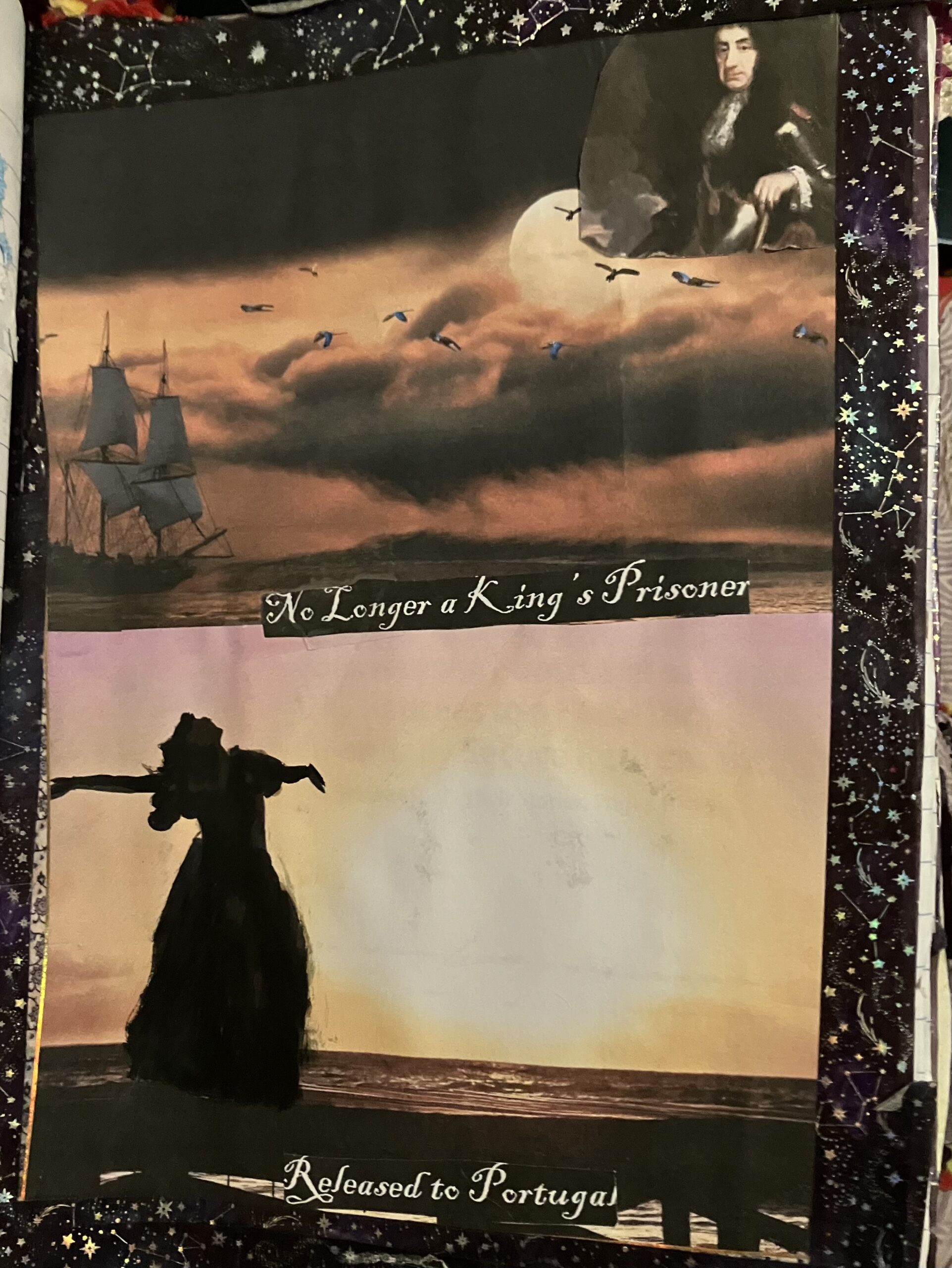
After a twenty-three marriage that included an apology to her from Charles on his deathbed, Catherine wanted to return to her homeland of Portugal. She got her wish seven years later.
This is where I really get speculative:
So the fluff of Disney’s Beauty and the Beast musical and two popular movies crosses my mind at Catherine going back home. The Beast/Charles experience loss and regret.
But getting back to the more serious (but still a little speculative) stuff….
I imagine that freeing Catherine was the best thing Charles could do for her—and he had to help out with that from heaven. Hopefully, he realized that Catherine—in my humble opinion—was the best thing that ever happened to him.