Category Archives: Royalty

Marie Antoinette and Her Children Painting

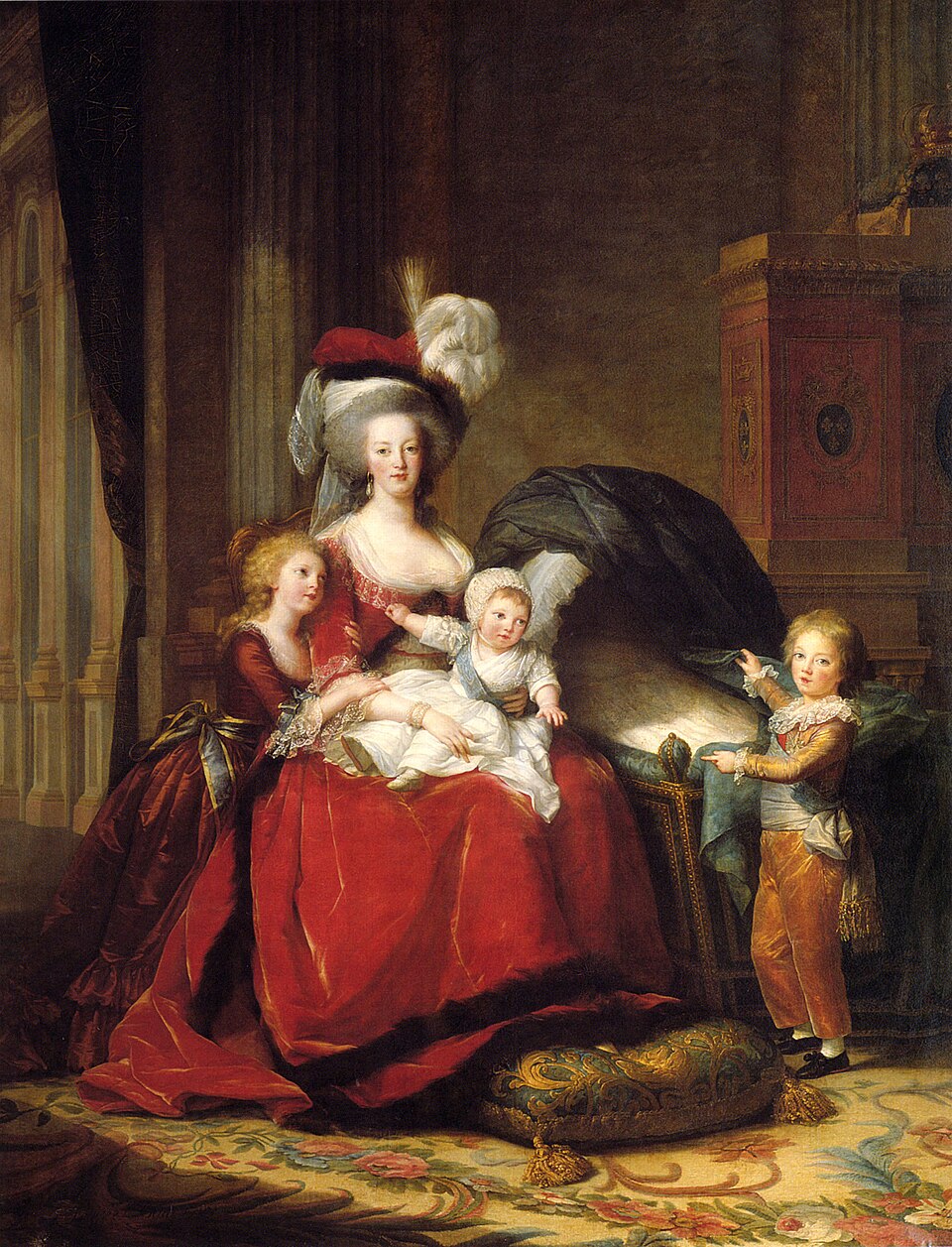
Marie Antoinette and Children, also called Marie Antoinette of Lorraine-Habsburg, Queen of France, and Her Children, was painted by Élisabeth Vigée Le Brun in 1787 and is still used quite a bit in teaching about the French Revolution time period and Marie Antoinette herself. While I’ve always appreciated it as a great art piece, I got bored of seeing it in so many places. It’s beautiful and grand, and her daughter looking longingly at her mother is a little over the top. However, when I learned more details about the painting recently, it became a lot more interesting!

A Daunting Task

Left to right: Marie-Thérèse, Marie Antoinette holding Louis Charles, an empty cradle for baby Sophie (who died before the painting was completed), with Louis Joseph pointing at it. The children outshine the darkened jewelry box at the very right.

Élisabeth Vigée Le Brun had great respect for Marie Antoinette. She started painting her in 1778. They sang duets as the Queen sat for portraits, and both valued motherhood.

Self Portrait with her Daughter Julie (Maternal Tenderness), 1787 by Elisabeth Vigée Le Brun,

In fact, when Le Brun had been pregnant and dropped her art supplies in front of the Queen, she was shocked when the Queen helped her pick up the supplies.

Marie Antoinette was a constant victim of libel, but when Le Brun was approached to make paint a state-type portrait, the Queen’s reputation had recently become more tarnished by the Affair of the Diamond Necklace. (An event where the Queen had been falsely accused of buying–but refusing to pay for–a very overpriced and tacky piece of jewelry.) It was a scary time for the Queen and those associated her. Getting people to see a woman who was a queen and loving mother was no easy task given the circumstances.

The Dress

Marie Antoinette’s red dress is bold but also is a throwback to certain portraits of saintly women.

The first saintly woman is the mother of mothers–Mary, the mother of Jesus.

Madonna of the Meadow-once known as Madonna with the Christ Child and Saint John the Baptist, 1506 by Raphael.

Then a tribute to Queen Marie (Marie Leszczyńska–her husband’s grandma), who was known for her piety.

Portrait of Marie Leszczyńska, 1748, by Jean-Marc Nattier

Featured Jewels

Simple pearl earrings are the only jewelry the Queen is wearing–despite the big jewelry in the corner that I hadn’t noticed before I researched this painting.

The jewelry box is present but hardly noticable. Marie Antoinette’s real jewels were her children.

This is reflected of a woman named Cornelia who lived in ancient Rome and mother of the Gracchi brothers. When her friends asked about her clothes and jewelry, she showed her children and answered, Haec ornamenta mea,” translated into:

“These are my jewels.”

Cornelia, Mother of the Gracchi, by Noël Hallé, 1779

Reception

The reaction to the painting was mixed. Her friends and brother told her the painting would receive “universal acclaimed.” It’s true—as mentioned before, it seems like it’s almost over used. But it’s easily recognizable and will continue to be used as a featured image in educational materials as well as merely showcased.

Going back to the time the painting was completed, it was showcased prominently in Versailles. However, it was moved to a less frequented place after the death of the Queen and King’s oldest son, Joseph (who’s pointing to the empty cradle of his deceased baby sister, Sophie) out of grief. (Marie Antoinette let Le Brun know about the action.)

Knowing the backstory–and the fates of those in the pictures–is heartbreaking and moving.

Hopefully, more people will know of the significance of the painting. If anything, may generations know that Marie Antoinette’s children were truly her most valued jewels.

Catherine’s Collage Collection: Showing Who’s Queen

I wrote my first Catherine of Braganza post about a decade ago. In it, I expressed how a certain painting of her cracked me up.

“Catherine was bold enough to remind them [mistresses of the King] she was the only one who held the title of queen.

For example, look closely at this portrait.

An accident? It’s almost as if she’s pointing at the crown. Time went on, and most of her portraits included the crown and sovereign orb.”

That painting was still in my mind when doing the collage book. I decided the crown needed to be bigger and more visible.

(Plus the late Elizabeth II’s philosophy about being seen is applicable.)

I hope Catherine wouldn’t mind me adding some sparkly nail polish to her dress and drawing the crown and orb bigger that also includes sparkling jewelry and lace trimming tape. Part of the image she and her advisors stressed was she’s someone who didn’t care about glitzy stuff. But maybe this art work would make it super, SUPER clear that the sitter was truly the top royal woman.

Catherine was Queen!

Alice, The Offbeat Princess

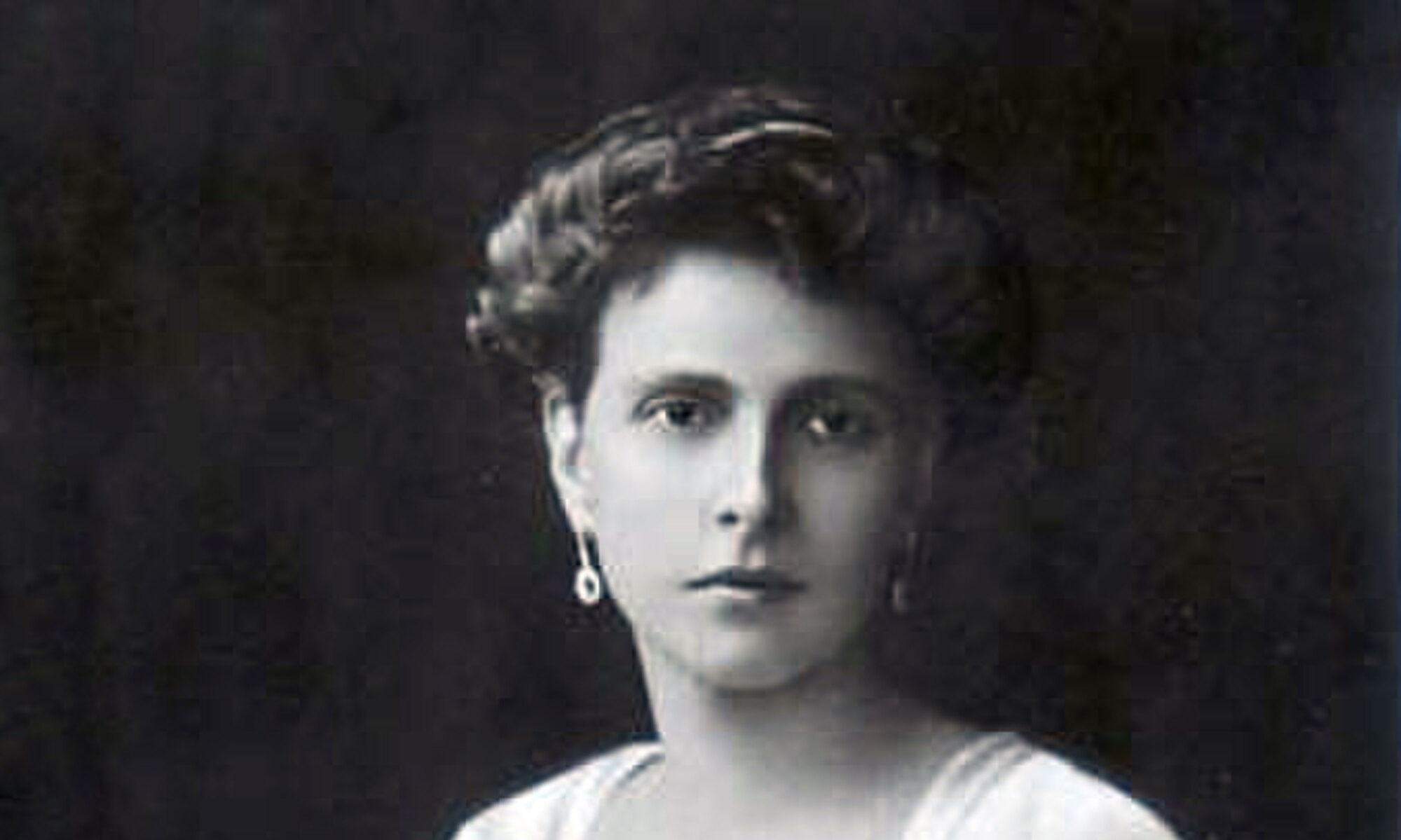
Princess Alice was a unique and remarkable individual. She was born in 1885 in the presence of her grandmother, Queen Victoria, at Windsor Castle.

“The Four Generations” by Gustav Mullins

Baby Alice sits on her mother’s lap. Her aunt is standing, and her grandmother, Queen Victoria, is sitting.

Alice knew four languages, was deaf, and fluent at lip reading. Her marriage to Prince Andrew of Greece and Denmark in 1902 produced a family of four daughters and one son. She went through World War I bandaging up soldiers in war zones, her husband nearly being executed, and the family fleeing in exile from Greece. By 1923, the family were refugees in Paris.

Though the family didn’t have much money, her son, Philip, told biographer, Gyles Brandeth, “My recollection of the 1920s in Paris was that we were a very happy family, and it was a very good time.”

Prince Philip with his mother in 1926.

Princess Alice’s youngest child and only son didn’t know his mother was going through a breakdown. She told people of erratic religious visions. Other family would send her to a clinic where she was forced to have very inappropriate physical treatments. Alice discharged herself from there after a few months. Her mother wasn’t convinced, and arranged Alice to be taken away to a sanatorium in Switzerland. In 1930, Alice was taken away while her mother took Philip on a picnic. Alice felt like a prisoner and even made an escape attempt. She missed all four of her daughters’ weddings. Her son was sent to British relatives and boarding schools. Her husband lived in France with his mistress.

In 1932, Alice was discharged from the sanatorium. She distanced herself from her family and traveled throughout Europe. But she really missed her son though. Alice began exchanging letters with her son and other family members. In 1937, she briefly reunited with her family (including Philip and her estranged husband) for the funeral of a pregnant daughter who–with her husband and other children–died in a plane crash. The family noticed that Alice was back to being mentally stable. She felt needed again.

In 1938, Alice returned to Greece–which now was more friendly to royals. Upon her return to Greece, Alice went to helping the poor and needy. Food soon ran out in Athens. Her brother would send food or money to her but was frustrated that she would give it away.

The Cohens

The Cohens were a prominent Jewish family in Greece with ties to the royal family. As Greek Jews were being rounded up and sent to death camps in 1943, Rachel Cohen and her daughter, Tilde, were hiding in the outskirts of Athens but needed a safer hiding place.

When the Cohens walked passed the royal residence, Alice’s lady-in-waiting came out and greeted them. Alice and the lady-in-waiting had been on the lookout for the family since the day before. Alice was more than happy to taken Rachel and Tilde in. Later, Rachel’s youngest son, Michel, joined his sister and mother in hiding.

The Gestapo had suspicions that Alice was hiding Jews. They heard conversations (Alice and the Cohens) coming from upstairs. When they questioned Alice, she said it was just the nanny and was able to dodge other questions using her deafness as an excuse.

Evy Cohen, a descendant of the Cohens, credits her existence to Alice. She insists Alice’s story must be told. The Cohens applied for Alice to be recognized as one of The Righteous Among the Nations. In 1994, Philip visited his mother’s grave in Israel (yes, I’m jumping ahead a little bit), and at the ceremony honoring her, he commented how Alice didn’t tell her family the story immediately. He said:

“For years, we did not know, and, as far as we know, she also never mentioned to anyone, that she had given refuge to the Cohen family.”

She gave refuge to the Cohen family for thirteen months. By that time, Athens was liberated. Alice continued to stay in Greece, helping out, but made some important visits to Britain.

Going to Britain

One visit occurred in April 1947 when her son got married to Princess Elizabeth. Alice had arranged for some of her few remaining jewels be incorporated in the engagement ring.

When Alice went back to Greece, she decided to become a nun and start an order. Another important visit to Britain was her daughter-in-law’s coronation. Alice showed up in a designer nun’s habit.

When she was back in Greece, she continued to volunteer but found it hard to find women proper enough to become nuns. With her failing health and a royal coup in Greece, Alice was persuaded by Philip and Elizabeth to return and live in England in 1967. She resided in Buckingham Palace and died in 1969.

Shortly before her death, she wrote her son,

“Dearest Philip, Be brave, and remember I will never leave you, and you will always find me when you need me most. All my devoted love, your old Mama.”

Legacy

Before her death, she wished to be buried in Jerusalem. In 1988, her remains that were buried in England were moved to Jerusalem. Since then, her son, grandson, and great-grandson, have visited her grave.

She was recognized as Righteous Among the Nations. In the 1994 ceremony, Prince Philip also said,

“I suspect that it never occurred to her that her action was in any way special. She would have considered it to be perfectly natural human reaction to fellow beings in distress.”

On Holocaust Memorial Day 2025, Prince William gave a touching tribute to Alice:

Princess Alice was one eccentric, brave princess. Her life could have been a tragedy with all it setbacks, but she did overcome them. Her example of service and not giving into peer pressure is a story that really does need to be told.

Princess Andrew of Greece and Denmark by Philip de László, 1922.
From Private collection of Prince Philip, Duke of Edinburgh.

Sources

Videos:

In addition to Prince William’s tribute, check these enlightening videos out:

The Extraordinary Life Of Princess Alice | Queen’s Mother-in-Law | Real Royalty Accessed Mar 3, 2025.

Princess Alice: The Royal’s Greatest Secret | Royal Family Secrets. Accessed Mar 3, 2025.

Articles:

The extraordinary life of Prince Philip’s mother, Princess Alice of Battenberg, on the anniversary of her birth by Rebecca Cope. The Tatler. Accessed Mar 3, 2025.

How Princess Alice saved an entire family from the Nazis. The Guardian. Accessed Mar 3, 2025.

Prince Philip’s Mother Saved Jews during the Holocaust by Adam Ross. aish.com. Accessed Mar 3, 2025.

Prince Philip Received a Heartbreaking Letter From His Mother Just Before She Died by Amy Mackeldon. Marie Claire. Accessed Mar 3, 2025

Prince William pays tribute to deaf great grandmother Princess Alice by Heather Lomax. British Deaf News. Accessed Mar 3, 2025.

Princess Alice. Yad Vashem: The World Holocaust Remembrance Center. Accessed Mar 3, 2025

Princess Alice of Battenberg: The Other ‘People’s Princess’ by Hannah McCann. New Histories. Accessed Mar 3, 2025.

Princess Alice of Battenberg wikipedia article. Accessed Mar 3, 2025.

A Righteous Princess. by Daniel Adamson. Holocaust Centre North. Accessed Mar 3, 2025.

ROYAL HERO How Prince Philip’s mum risked her life to hide three members of a Jewish family and save them from Nazi death camps by Alison Maloney. Accessed Mar 3, 2025

Hatshepsut: Nearly Erased From History, But Why?

This question started out at the airport. But it started with the Internet search, “pharaoh during Moses’ time.” I’m still wondering what Moses’ time in Egypt was like, and I was surprised that Hatshepsut was mentioned in a possible timeline.

She was included in the article, “Who Were the Egyptian Pharaohs During the Time of Moses?” The article discusses Alfred J Hoerth’s book Archaeology and the Old Testament where he presents an interesting timeline, and Rameses II–a pharaoh usually included in Moses’ story–isn’t that present. Instead, the article talks about the possibility that the pharaoh that eventually let the slaves go was Thutmose III, the stepson/nephew of Hatshepsut.  

It’s said Thutmose III was responsible for making Hatshepsut disappear from history.

What I mean by “disappear” is that it was him who tore down her monuments, hid her achievements, and had her pictures scratched out from the wall art.

Back to the airport, I went to YouTube to a Horrible Histories’ sketch I vaguely remember watching about Hatshepsut.

If the video is taken off the Internet, the history you “learn” from it is that Hatshepsut ruled for nearly 22 years, but was probably murdered by her stepson, and then he erased her from history. He was super mad.

It’s a great story, and I love Horrible Histories. But I decided to do a more thorough search.

Well, it was a quick search. My plane was boarding shortly. I scanned some information, and the only information I remembered was she made her stepson head of the army.

I thought about that fact for the whole flight.

Taking a Dig?

So, after I got to my destination and during some free time, I watched a documentary titled Hatshepsut: Secrets of Egypt’s Lost Queen. It’s a about archeologists and other historians examining her life and mummy candidates to see if they could find her.

What stood out to me most was the excitement of those involved in the project. I totally get it. You want to meet a person in history so badly, and this is chance to get close! There were discovered, little trinkets probably owned by Hatshepsut, and I would love to get my hands on something owned my one of my historical heroes!

And of course I was impressed how they narrowed the mummies to one candidate.

If you accept that candidate to be her, then Hatshepsut wasn’t murdered. (Sorry, Horrible Histories.) The documentary reports she died from a tooth infection/disease. Other reports showed diabetes or bone cancer. Whatever the case, she wasn’t killed by someone else.

Then the documentary shifts to a team also looking at certain wall art where they discovered where her images had been. But the images had been scratched away, and they had been replaced with images of Amenhotep II, who happened to be the son of Thutmose III.

The commentators said this action was probably taken for Amenhotep II to have a stronger claim to the throne, and that the throne is usually passed down from father to son.

Plus, Thutmose III didn’t go on a rampage right after her death to destroy Hatshepsut’s legacy. He removed her from history when he got older. Like two decades later. There’s a good chance that Thutmose III wasn’t taking a dig at his stepmother.

She wasn’t the only ruler carved out of Egyptian history–even men were. It was a strategic move to avoid future conflicts. It is sad, but that’s the way it was.

If the documentary was right in their claims, I’d like to imagine she celebrated when found.

Wrapping It Up

Gathering other information, Hatshepsut prepared her stepson very well to rule. I’ve concluded that Hatshepsut practically gift-wrapped Egypt for him.

To Thutmose III With Love, Hatshepsut

Ancient Egypt rulers were unlikely to predict the way good technology that was to come. (I’m always surprised with new tech that comes out myself.) Maybe Thutmose III meant to do a sloppy job. But that’s just a speculation.

I believe Hatshepsut and Thutmose III were more of a team than enemies.

Other Thoughts

In one of Simon Whistler’s videos on Hatshepsut, he reflects on remembering Hatshepsut, and how she was unsure how or if she would be remembered.

In case you didn’t make it through this whole video, Mr. Whistler quotes the female phaoroh saying:

“Now my heart turns this way and that, as I think what the people will say. Those who see my monuments in years to come, and who shall speak of what I have done.”

Hatshepsut

I think Hatshepsut’s story offers hope people who think they’ll be forgotten.

But the forgotten part can be temporary…even if thousands of years go by!

Arranged: Marie-Antoinette and Louis XVI

If their lives had crossed paths, would there have been any chance that they’d get together? Yes, yes, YES!

First of all they were the same religion. I’ve concluded that in all marriages—you better have the same standards.

Marie-Antoinette and Louis remind me of the couples that knew each other in high school and went to some of the same church functions, but hooked up after graduation. They became adults, noticed, and took a strong interest in each other.


Click here to read a more detailed analysis of this couple.


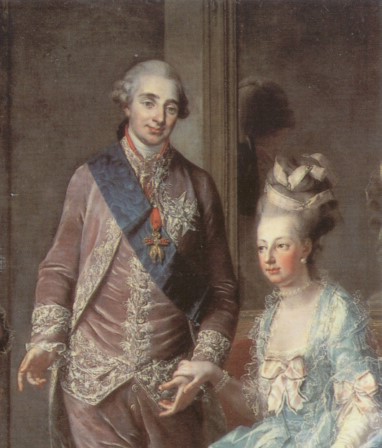
Featured image:Marie Antoinette, Emperor Maximilian and Louis XVI by Josef Hauzinger  Josef Hauzinger public domain.


Arranged: Catherine of Braganza and Charles II

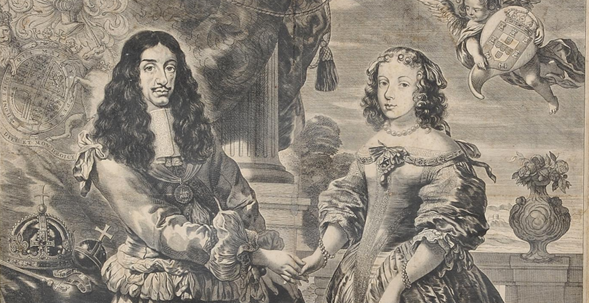
Catherine and Charles’ marriage didn’t end in divorce, but it wasn’t exactly a success. The man had many mistresses before and during their marriage, but the couple stayed on somewhat good terms.

Would Charles’ character had been different if he hadn’t had access to so many women? If he lived today, would he had signed up for an addiction recovery program?

Catherine had admirers herself. One man got fired from her service for getting too close with her. After Charles’ death, there were rumors she had a relationship with a Frenchman who had served her for years.

Maybe the mothers would still have played an important part in matchmaking; only this time it would be for everyday life, not making alliances between two countries. The mothers of this couple were both Catholics. Charles’ mother was happy when her decided to marry a good, Catholic girl.

Once again, religion is an important factor. Charles declared himself a Catholic at the end of his life, which is what Catherine had been her whole life.

I don’t know if they would have picked each at an ordinary party, but their marriage probably would have been better if they hadn’t been in high positions where they had opportunities to interact with questionable characters and temptations.


Featured Image: Charles II of England and Queen Catherine of Braganza (Dutch engraving, 3rd quarter of the 17th century)

Arranged: Michal and David

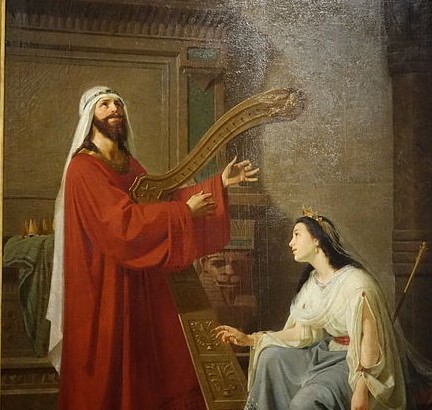
Michal and David were both at the royal court, and David was working his way to have power—for which Michal was used. But what if Israel hadn’t wanted kings—would they have gotten married? It’s hard to say since they were from different tribes, and usually tribes of Israel stuck with their own. However, marrying into other tribes still occurred.
When it came to martial rules, though, Israel’s number one was “marry in the covenant.” They had the same religion, and that’s huge. Say that somehow they got “arranged.” Would the marriage have worked?

If they weren’t royal there would have been more privacy. Michal and David would have spent more time together. There wouldn’t have been much competition—if any—with other wives. The two would have had a better chance of having a family together.

Let’s fast-forward to today. There’s still much controversy around royal marriages. I will tie in Sarah Ferguson and Prince Andrew. The couple divorced, but Sarah still gives flowing reviews of her ex in public. In one interview, she said their marriage would have worked out if they had been “in normal life.”

Let’s say Michal and David had lived in a “normal life”—would their marriage have worked? I strongly believe it would have.


Featured image: David and Michal by Virginio Grana, 1865

King David’s Biography, A Poem

Some think I’m too harsh on King David. It’s heartbreaking for sure when researching people that associated with him. His victims didn’t get that much justice during their lives. Here’s my biography about the man:

“King David’s Biography, A Poem”

King David gloried in his life and times
But tried to cover up his crimes.
He got caught in his lies
And his family cut ties.
He took too many wives
And destroyed many lives.

King David’s Biography, a Poem ©Sarah Patten, 2019

The Princess, the King, and the Tyrant

It’s strange to start out with the moral at the beginning of the story, but that’s exactly what I’m going to tell you. No, Maximilien Robespierre will tell you:

Robespierre_crop

Maximilien Robespierre was a well-spoken leader who led with terror.


“Citizens, take warning; you are being fooled by false notions.”

Those words are taken from an address to justify the execution of Louis XVI.

Ludvig_XVI_av_Frankrike_porträtterad_av_AF_Callet

King Louis XVI of France wanted peace.

It also sums up what others would feel toward Robespierre as time went on. Basically, it leads to the question: What is truth?

Maximilien Robespierre had pushed for Louis XVI’s execution but wasn’t for Princess Elisabeth’s, the King’s sister.

44Elisabeth Viigee Le Brun-Madame_Elisabeth

Princess Elisabeth of France. The King’s youngest sibling.

Yet, she was executed May 10, 1794. And a couple months later, Robespierre would be executed.

The lives of the Princess, the King, and the Tyrant were connected way before the French Revolution.

Losses

An important place to start is the year of 1764. It was important to both the Robespierre and the Bourbon families.

In May, Maximilien Robespierre turned six, and the royal Bourbons welcomed a baby princess.

In July, Robespierre’s mother gave birth—to a stillborn son. She died soon after. Robespierre’s sister recalled in her memoirs this death changed him. He lost his childhood. In addition to that, his father left the family. The man who was supposed to be one of the most important  role models in a young boy’s life distanced himself from his children. I consider this to be Robespierre’s first major rejection.

The Bourbon children lost their parents to death within three years of Princess Elisabeth’s birth.

Successes

Despite losing parents young, Louis, Elisabeth, and Robespierre were all very intelligent and accomplished individuals. Just to mention some examples: Louis excelled in languages; Elisabeth in mathematics; Robespierre in rhetoric. All three wanted to be models of virtue. The Bourbon children took a religious approach while Robespierre leaned on secular philosophies.

Elisabeth carried a certain charm from her earliest days. Despite being a wild child, Elisabeth grew up to be lovely and known for her piety and wit. There were three proposed marriages, but in the end, she and her brother, now King, agreed that she would stay with the family.

Sometime early in Louis’ reign, he and his wife stopped by the school Robespierre attended. In fact, Robespierre was handpicked to give a speech in Latin at the special ceremony for the King and Queen. It turned out to be a dismal day. It was rainy, the monarchs were running late, and when they did arrive, they stayed in their carriage for the speech and ceremony. They left promptly after the ceremony. Robespierre had just been rejected by high society.

Life’s not fair! Right, Robespierre?

But Robespierre was a bright student and would eventually move up his way into politics after completing school. He started on a small scale during the king’s early reign. Louis and Marie-Antoinette had more of a positive image then.

To someone like Robespierre, it probably seemed as if the King had everything. Besides not agreeing with the King’s politics, I think there were other things that Robespierre  would find bothersome about the King. Louis XVI had obtained power through family deaths. He had a beautiful family, and he had a live sibling born in 1764. The King got a free pass while Robespierre slaved away to get to the top.

Annoying Sister

Elisabeth annoyed her sister-in-law at times. She could surprise her brother. But there was never any doubt that these individuals cared for one another, and that the King and Queen would be eternally grateful to Elisabeth for staying with the family to the very end.

Elisabeth felt she was following God’s plan for her. She was heaven sent in the eyes of Louis and his family.

She was certainly a type of nuisance for Robespierre. If only she had escaped like some of her other family members, he wouldn’t have been caught in a desperate situation.  He fought for her at her trial. But he lost. He just wanted her to be exiled, not guillotined.

People marveled at her poise during her trial and execution.

She had just turned thirty the week before she was executed in May 1794.

Fooled by False Notions

More and more people considered themselves “fooled by false notions.” The new government had stressed equality and virtue— so why were so many being punished and put to death?

Robespierre and his comrades became distrustful of one another. They too felt they had been fooled. They weren’t as loyal as they professed they would be. He had helped to reform this new society, and now he and former allies were betraying each other. This was  Robespierre’s third and final rejection.

Robespierre was executed in July 1794. Had his stillborn brother lived, he would have turned thirty a few weeks before—the same age as Elisabeth, who had met her death in her birthday month of May for being loyal to family. An eerie coincidence.

While I don’t accept that Robespierre is scapegoat of history, I do feel sorry for him. He had all these ambitions and felt that to fulfill them, he needed to take away life. In the end, the curse he set on so many rebounded on him.


Sources:

Maxwell-Scott Mary Moniac. Madame Elizabeth de France, 1764-1794.

Robespierre, Charlotte. Charlotte Robespierre’s Memoirs: Part 1.By   http://revolution-fr.livejournal.com/2370.html  accessed August 16, 2016.

Ten Brink, Jan. Robespierre and the Red Terror. 1899.

Trail and Execution (French): de Beauchesne, Alicide-Hyacint

Images:
Princess Elisabeth of France by Louise Élisabeth Vigée Le Brun (Public domain in U.S.) 1782

Portrait of Louis XVI by Antoine-Francois Callet. 1788 (Public Domain in U.S.)

Portrait of Maximilien Robespierre. 1790 (Public Domain in U.S.)


Review of Marie-Antoinette, Daughter of the Caesars

Marie-Antoinette, Daughter of the Caesars: Her Life, Her Times, Her Legacy by Elena Maria Vidal left me a lot to think about. 

Elena Maria Vidal is a fantastic writer and researcher. She paints a realistic portrait of Marie-Antoinette with facts to back all of it up. It’s very exciting. This book is spiritual, adventurous, and sweet.

I was especially surprised to learn about two specific pieces of unique artwork. It was fun to find out that Louis XVI kept a certain, flirty picture of Marie-Antoinette on his desk in which she’s dressed like a goddess holding a vase with his profile on it. The other one was a tearjerker sketch of Marie-Antoinette entering heaven to her welcoming husband and her two children who died before her.

One of the most memorable scenes comes from a memoir of a servant who witnessed Louis XVI coming into Marie-Antoinette’s room. While he’s being comforted by his wife, she commands the servant to leave.

From other examples, it’s obvious he suffered from depression, but with all the exterior events and past memories, who could blame him? And shouldn’t Marie-Antoinette get the most dedicated wife award? She stuck with him despite the multiple times he wanted her and their children to go to safety.

The spouses gave each other strength and were concerned parents. After their deaths, their daughter was provided for thanks to Louis’ emergency fund and Marie-Antoinette’s diamonds that had been sneaked out of France.

Thank you, Ms. Vidal, for providing so much information that makes me want to learn more!