Tag Archives: Catherine of Braganza

Catherine’s Collage Collection: Showing Who’s Queen

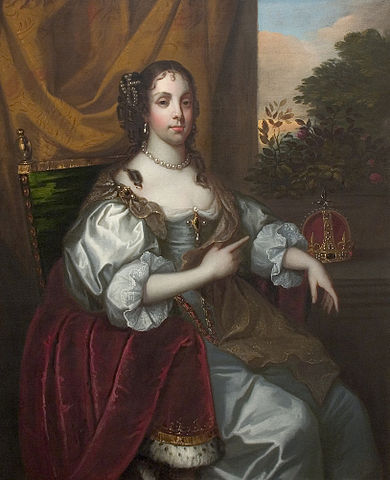
I wrote my first Catherine of Braganza post about a decade ago. In it, I expressed how a certain painting of her cracked me up.

“Catherine was bold enough to remind them [mistresses of the King] she was the only one who held the title of queen.

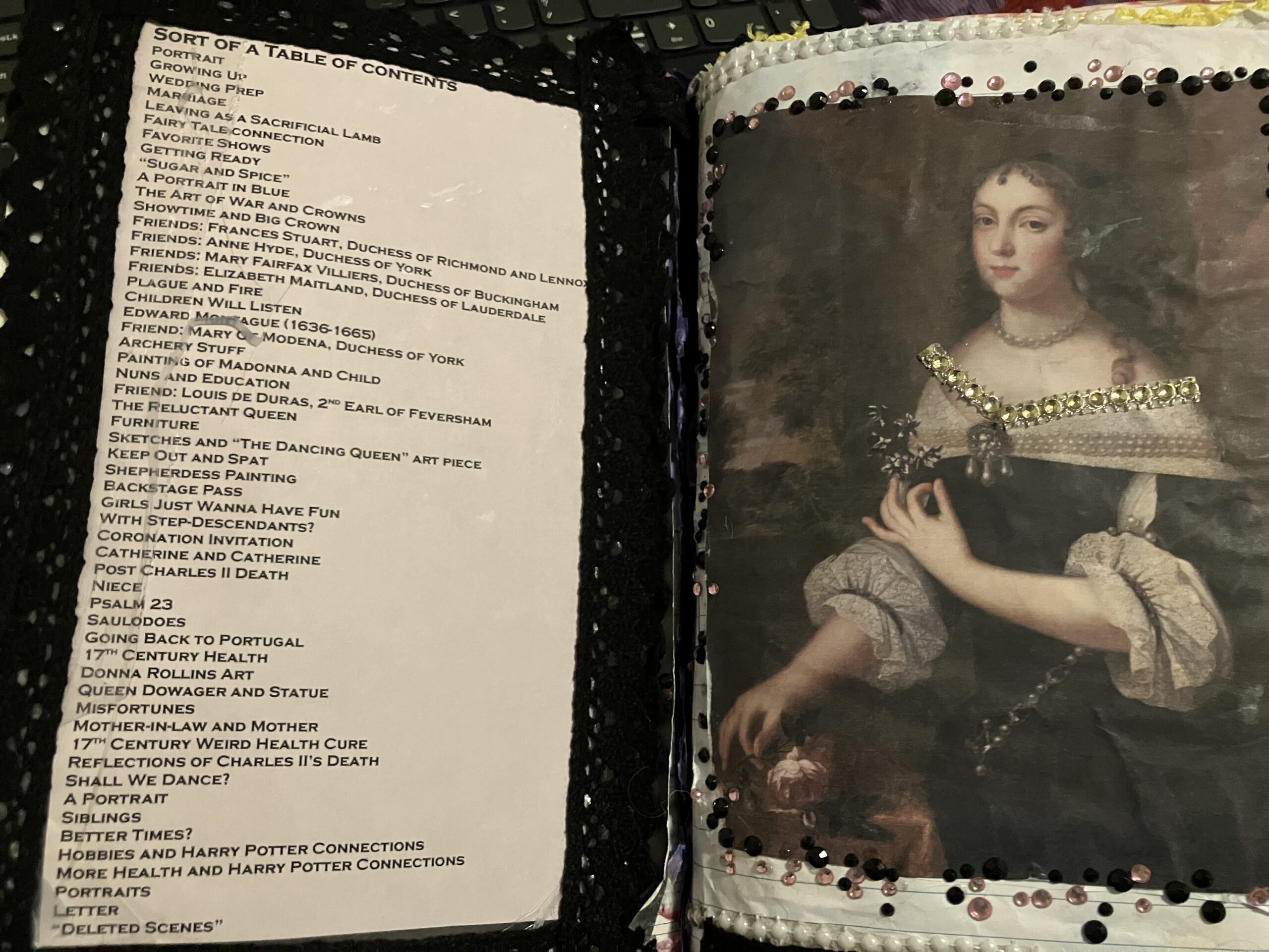
For example, look closely at this portrait.

An accident? It’s almost as if she’s pointing at the crown. Time went on, and most of her portraits included the crown and sovereign orb.”

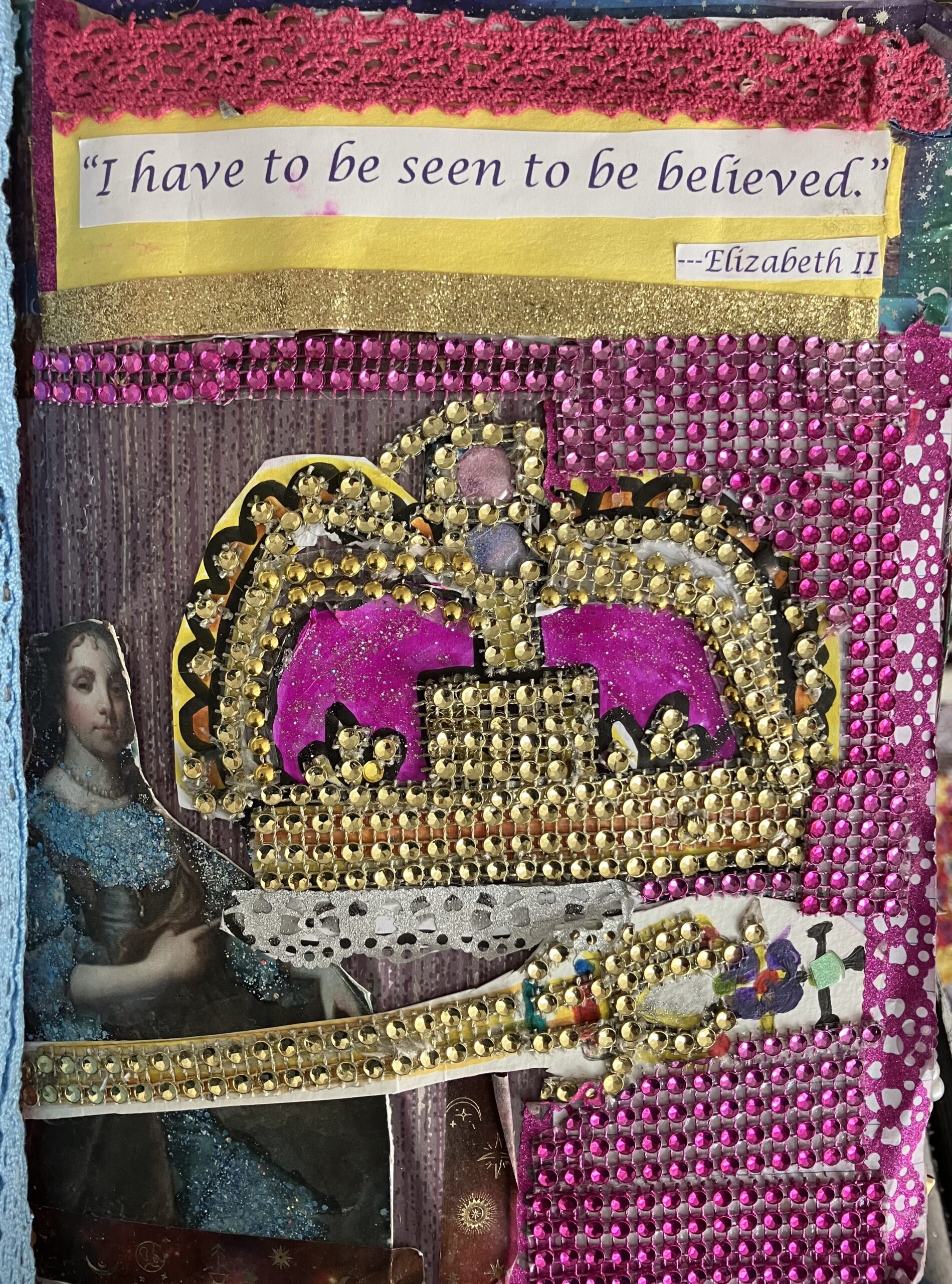
That painting was still in my mind when doing the collage book. I decided the crown needed to be bigger and more visible.

(Plus the late Elizabeth II’s philosophy about being seen is applicable.)

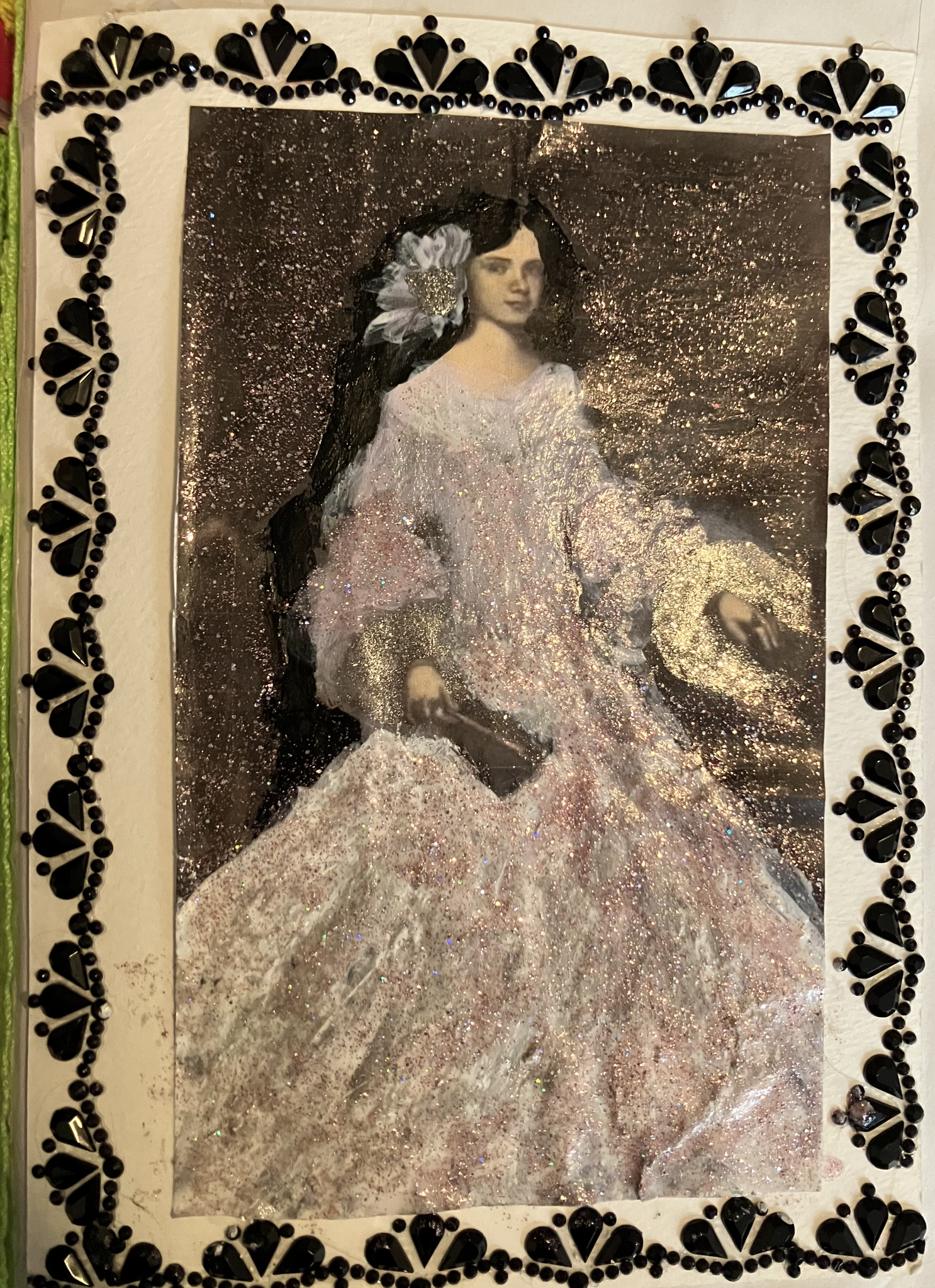
I hope Catherine wouldn’t mind me adding some sparkly nail polish to her dress and drawing the crown and orb bigger that also includes sparkling jewelry and lace trimming tape. Part of the image she and her advisors stressed was she’s someone who didn’t care about glitzy stuff. But maybe this art work would make it super, SUPER clear that the sitter was truly the top royal woman.

Catherine was Queen!

Catherine’s Collage Collection: MIL and MOM

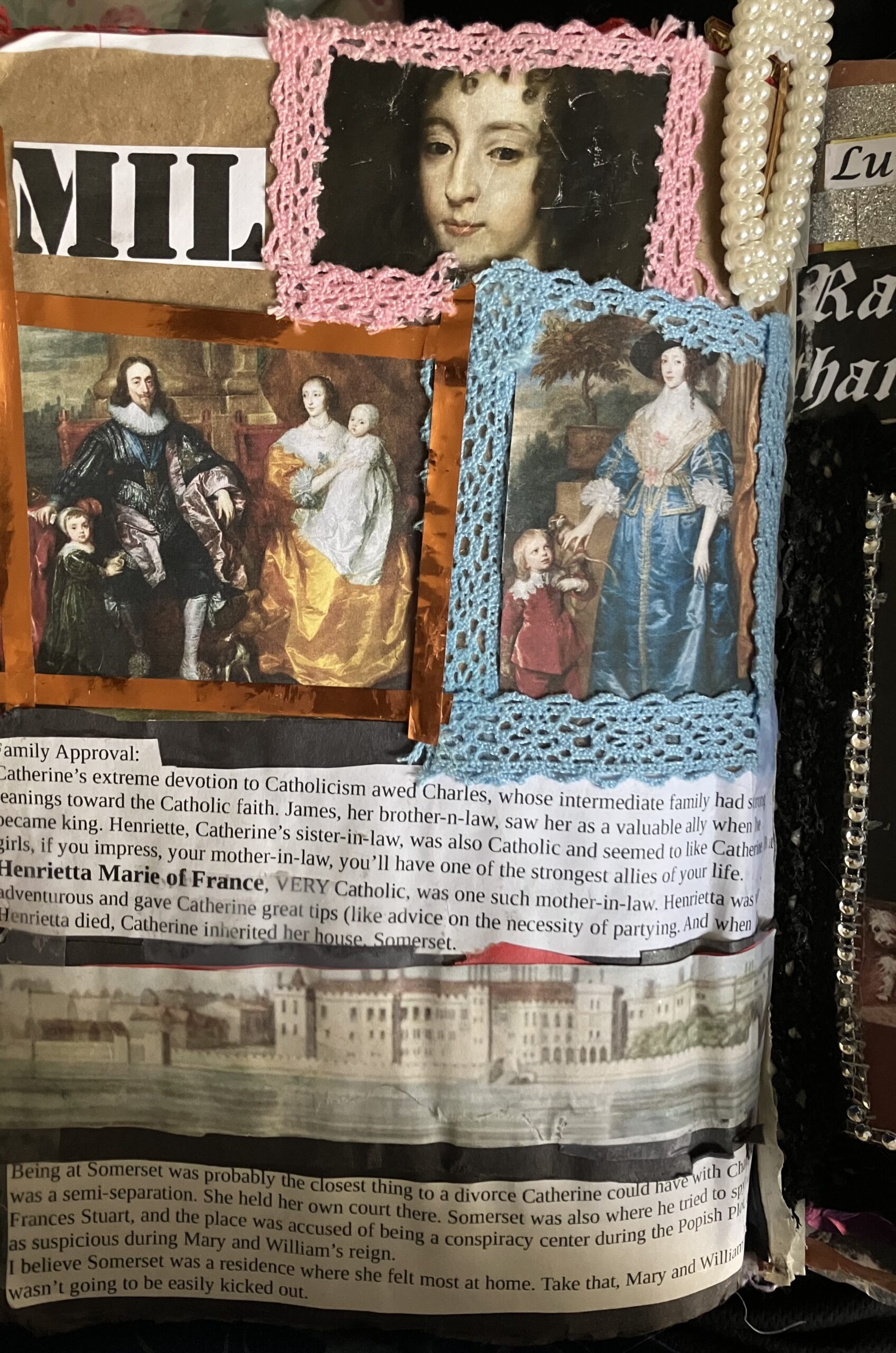
MIL

Henrietta Maria, Catherine’s mother-in-law, was a very valuable mentor to Catherine. The Dowager Queen gave tips on how to handle situations with her son and how to throw get togethers.

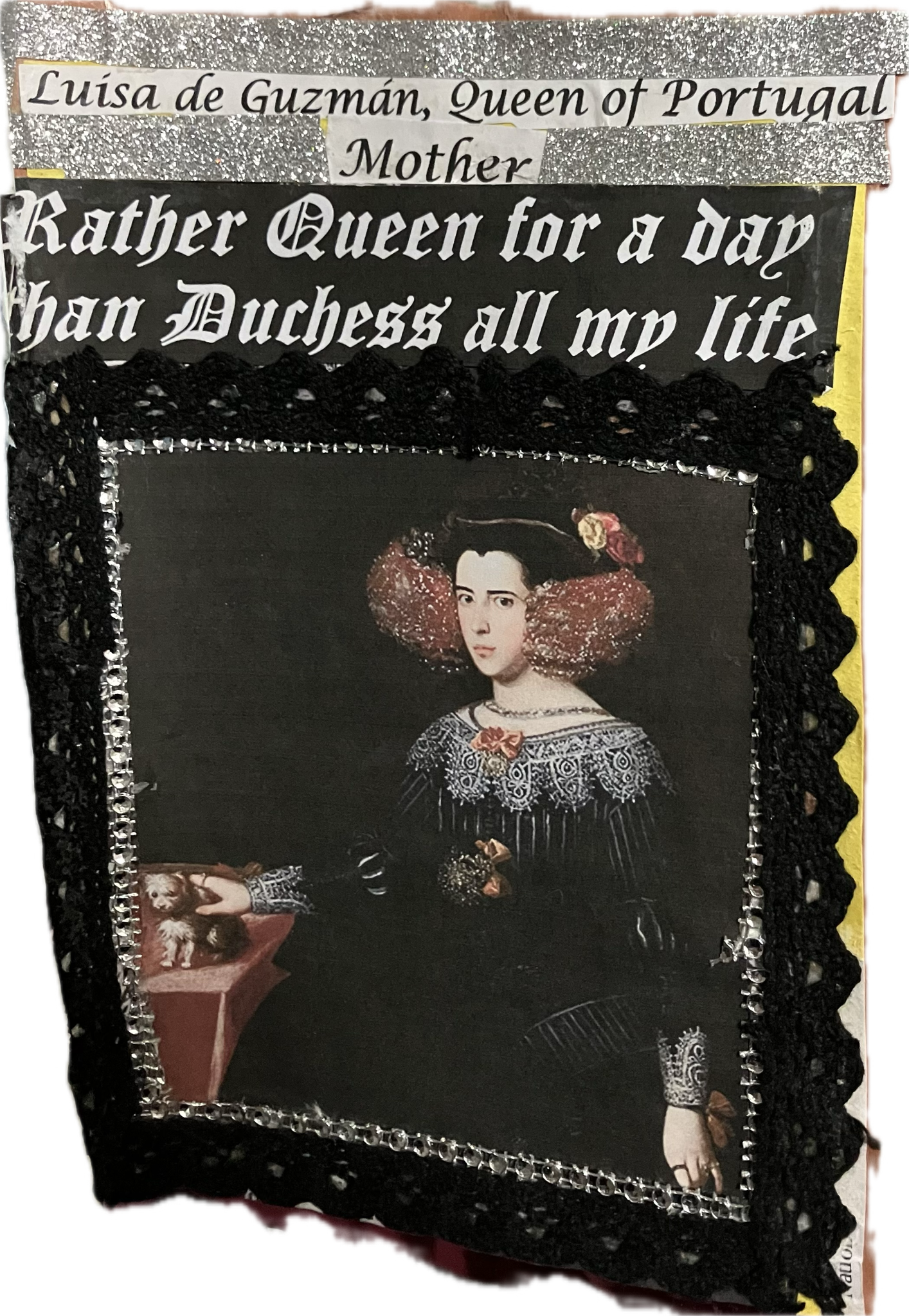
MOM

Luisa Guzman was sly and knew how to motivate her husband to fight for the Portuguese crown. She was more than just a duchess!
She even used a tiny Catherine to persuade him. According to Lillias Campbell Davidson’s biography on Catherine, Luisa hinted how wonderful it would be for their daughter if their family had the crown at two-year Catherine’s birthday party. Then Luisa was clearer when she physically presented Catherine to him. After Luisa got Catherine to kiss him, she’s quoting as asking:

“How can you find it in your heart to refuse to confer on this child the rank of a king’s daughter?”

When it came to the dangers of seeking a crown, she also said something else super important. Her famous quote was something that deserved to be a poster on Catherine’s wall:

How aware was Catherine aware of her mom’s statement I don’t know. But Luisa conducted herself with the attitude behind this quote. I believe her mom’s attitude to fight for her crown did make an impression on her.

Catherine’s Collage Collection: Dancing Fun

If Catherine had lived today, she would enjoyed watching reality TV—especially the talent competitions. 

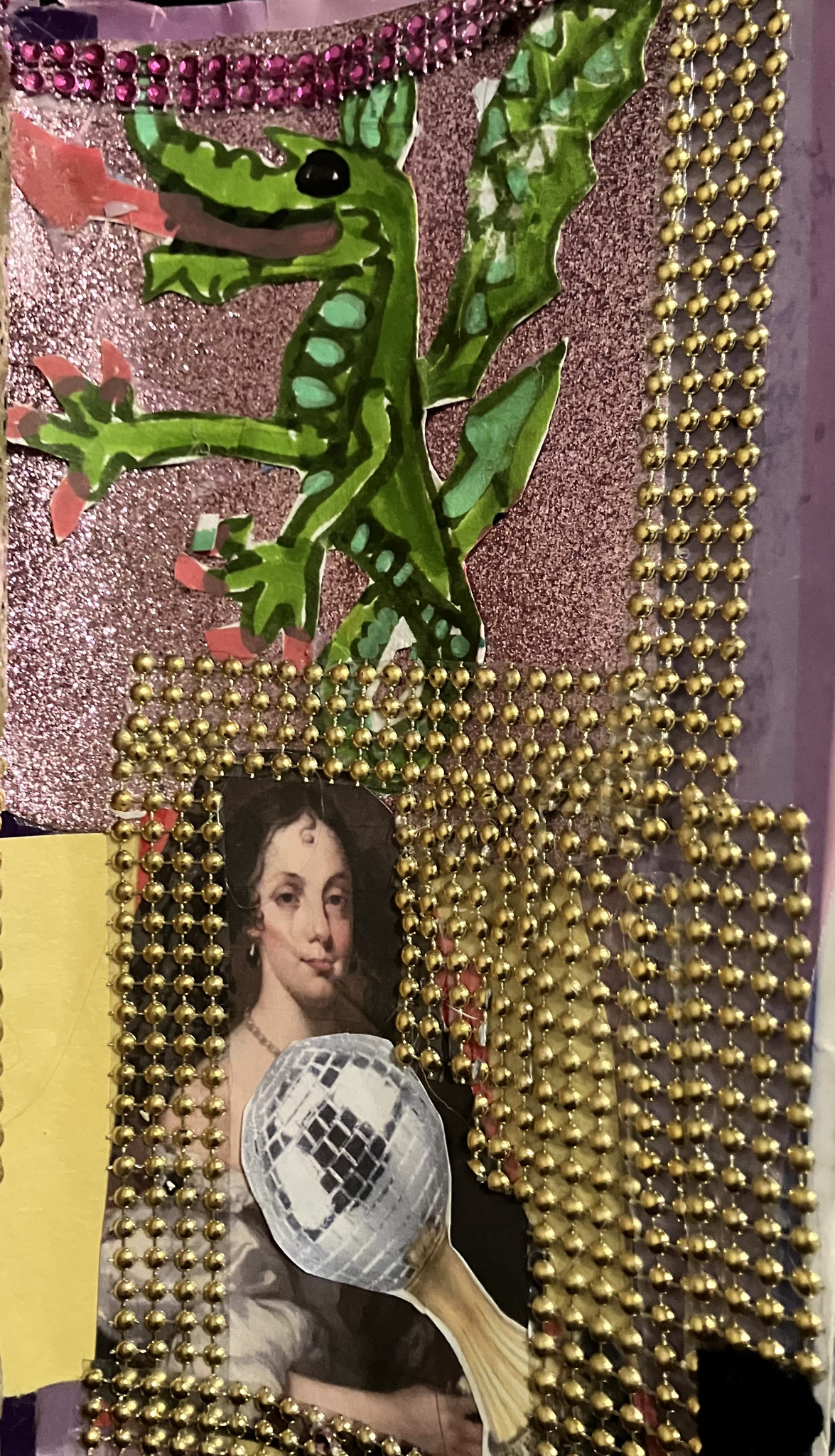
I’m being highly speculative of course, but I could see her dreaming of the Dancing With the Stars’ Mirror Ball Trophy.


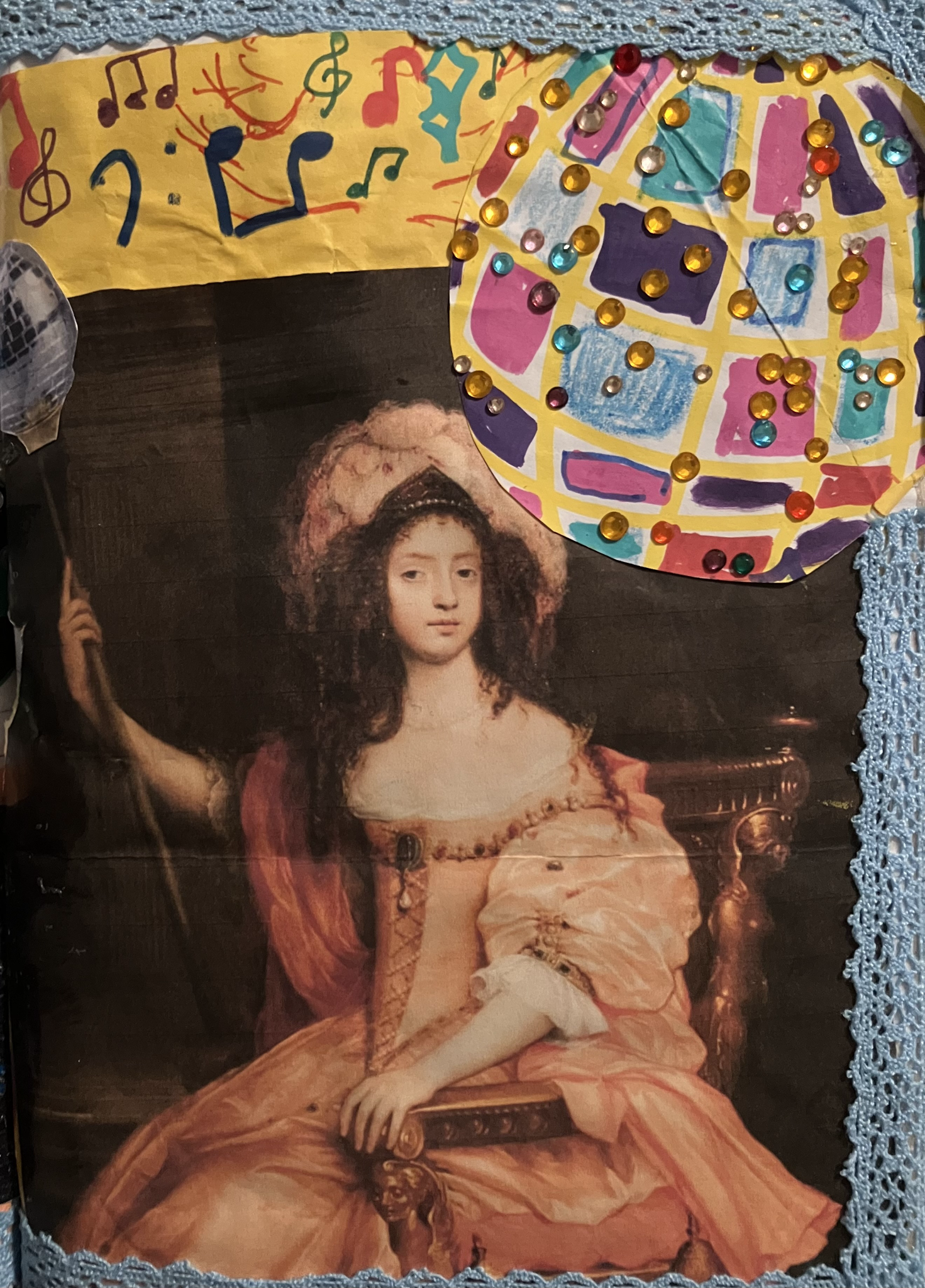
I also collaged a recently discovered painting with some people speculating its subject was a young Catherine.


I’m not sure if that’s true or not, but to make it more Catherine, I added some other touches…


There. 

Now it’s our Dancing Queen!

Catherine’s Collage Collection: Sacrifices and Beauty and the Beast

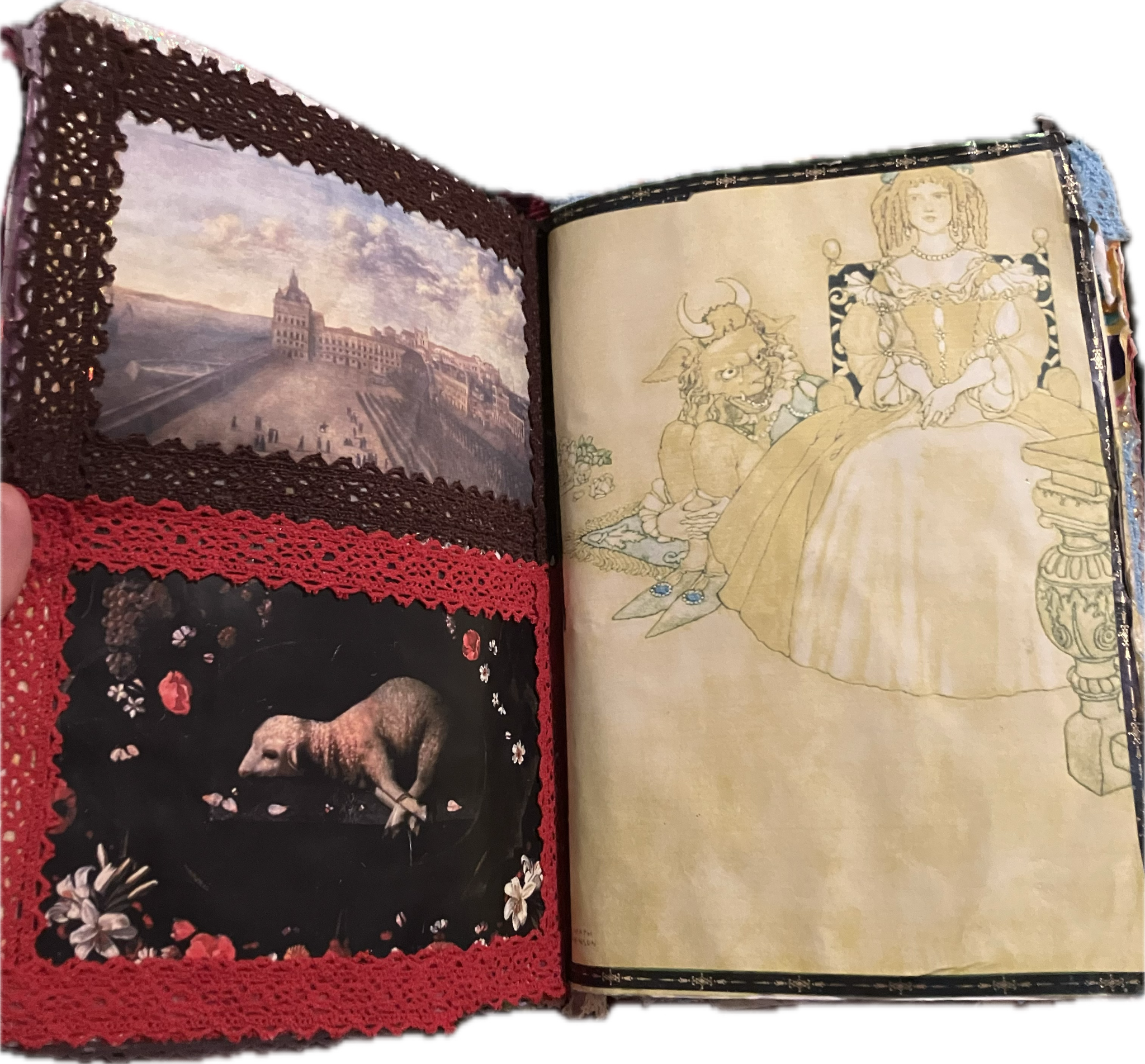
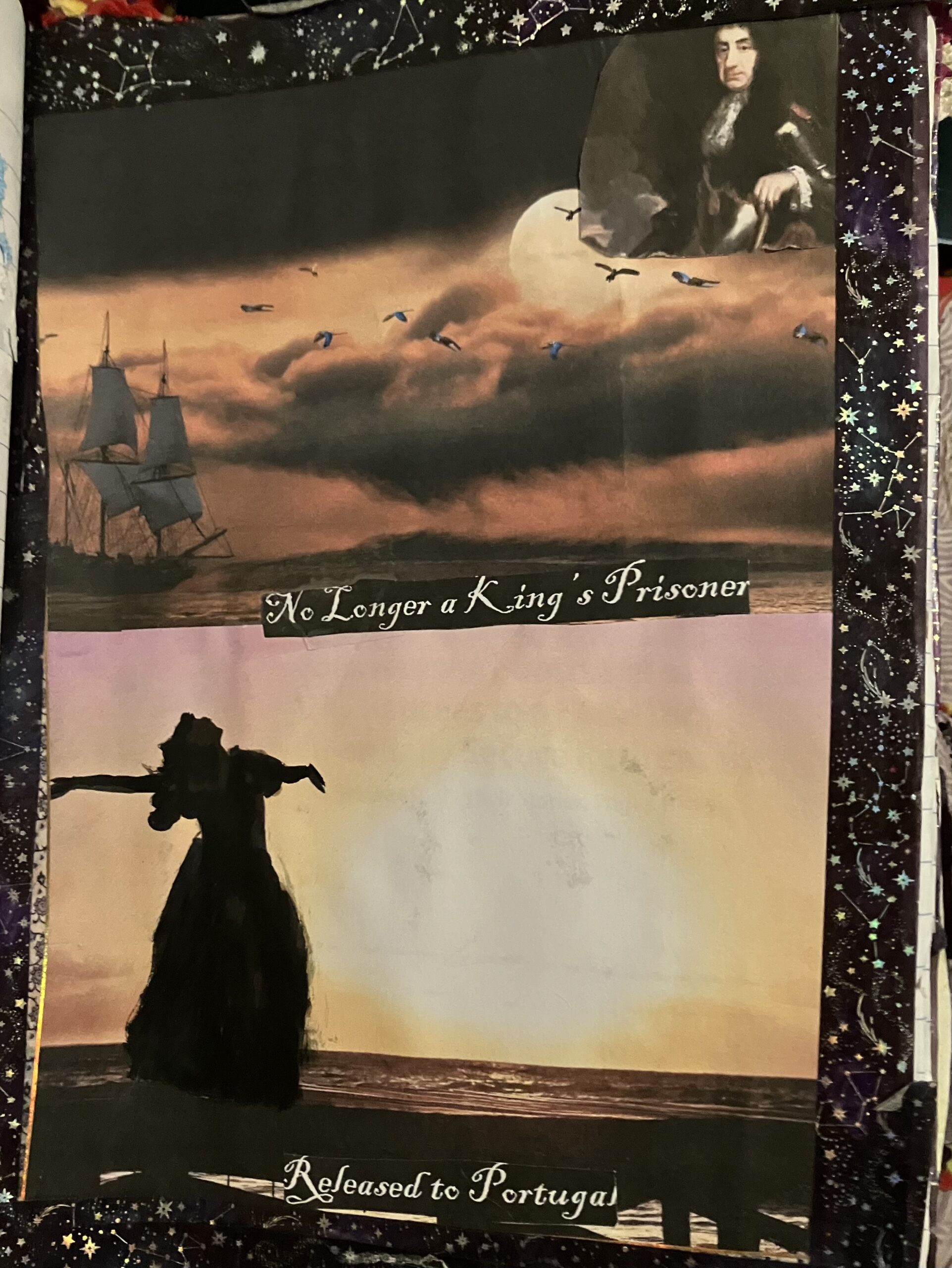
The pages that explore personal sacrifice were a tad bit emotional for me. The top left picture shows Portugal’s grand send off of their infanta to England to become England’s Queen. (I think the artist is Dirk Stoop?) It’s a celebratory moment, but a young woman is still leaving the home she loves.

She was a sacrifice. That’s why the bottom picture is Josefa de Obidos’ painting, The Sacrificial Lamb. (More background on that painting in a future post.) 

The right page is an illustration by W. Heath Robinson (1872-1844). (His actual painting is more vibrant, but my printer had low ink levels!)

Thoughts about Beauty and the Beast and Music

The Beauty and the Beast with the familiar French story motifs came into existence in 1740 by Gabrielle Suzanne Barbot de Villeneuve, and then an abridged version by Jeanne-Marie Leprince de Beaumont was published in 1756. But similar fairytale stores stories existed long before the 18th century. 

The woman given to a man she never met before is “a tale as old as time” that is actually a straight up fact more than a cliche.

I’ve concluded that these tales have been around for thousands of years not only because the magical and romantic appeal, but because they served an educational purpose: to prepare their daughters to marry strangers for the sake of the family. And for the sake of lands, kingdoms, and countless people who were depending on the marriage for their lives. And I hope the sons listened carefully-make sure you treat your wife kindly, or you might be in danger of losing your life!

I’m not sure if Catherine or Charles heard of these types of tales, but I crazy speculate that if she heard the Broadway soundtrack of Beauty and the Beast, she would have turned up the volume of “Home” (a defiant song Belle sings after she becomes the Beast’s prisoner).  Catherine was forced to accept her husband’s mistresses. In the very early days of the marriage, she loudly fought against it. I could see her blasting the song then-and maybe here and there throughout the royal union.

After a twenty-three marriage that included an apology to her from Charles on his deathbed, Catherine wanted to return to her homeland of Portugal. She got her wish seven years later.

This is where I really get speculative:

So the fluff of Disney’s Beauty and the Beast musical and two popular movies crosses my mind at Catherine going back home. The Beast/Charles experience loss and regret.

But getting back to the more serious (but still a little speculative) stuff….

I imagine that freeing Catherine was the best thing Charles could do for her—and he had to help out with that from heaven. Hopefully, he realized that Catherine—in my humble opinion—was the best thing that ever happened to him. 

Catherine’s Collage Collection: Young Memories

A lot of Catherine’s youth hasn’t been revealed/pieced together that well. It makes me frustrated anyway, but maybe if complied properly, she could have had her own book in The Royal Diaries series

The next best thing for me was making her a stereotypical teenage, scrapbook type collage. 

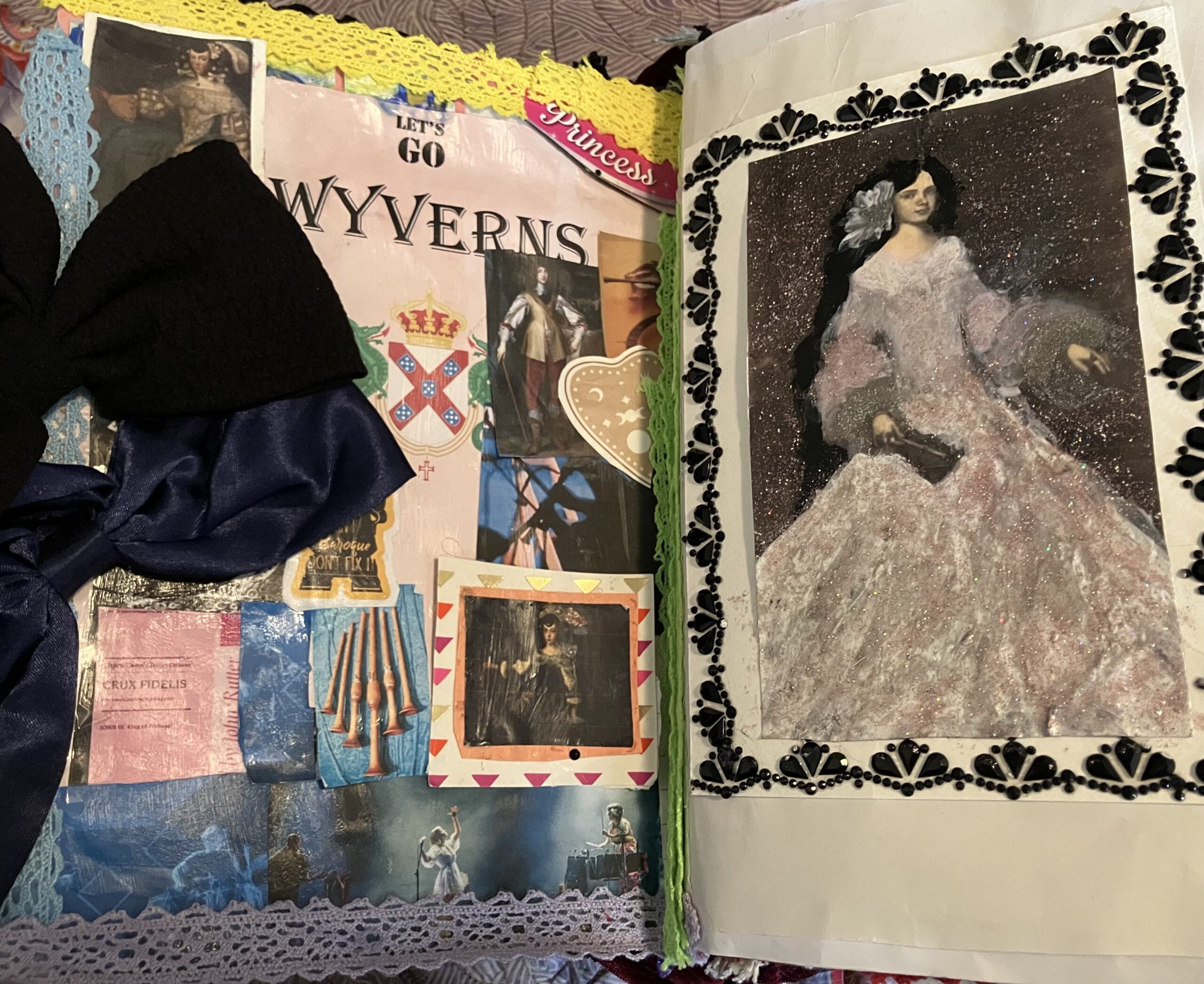
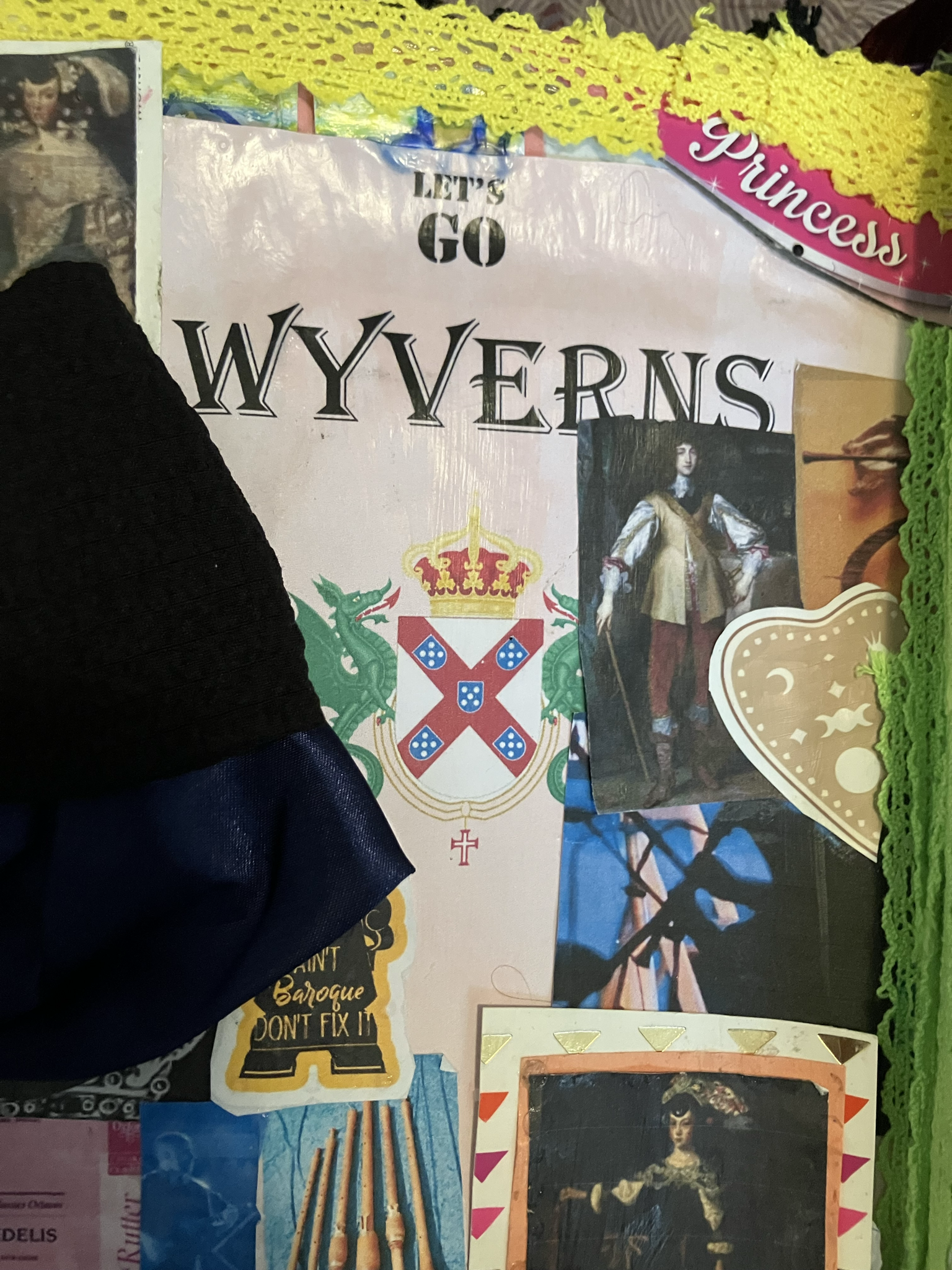
The biggest thing to stand out is a “speculative” banner that she would have held at a game that says, “LET’S GO WYVERNS.” The wyvern is the mascot of the Braganza House. Family/school spirit! 

The busy collage includes possible pics of herself and modern concerts, Portuguese instruments, a modern title page of one of her dad’s musical compilations, and a mysterious and handsome man.

That man was Prince Rupert-a scandalous, handsome pirate, and a cousin to the future Charles II. Prince Rupert was at first welcomed and popular court of the court of King John (Catherine’s dad) but soon became a liability. He would have been a fun character in a fictional royal diary! 

Catherine’s “Princess” Moment

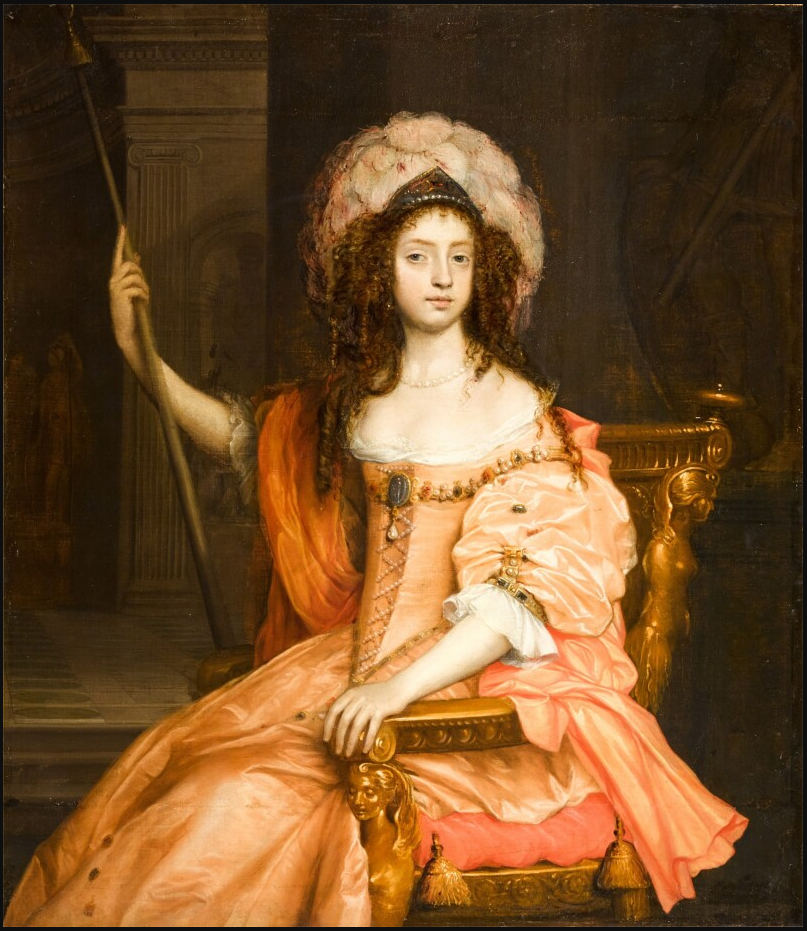
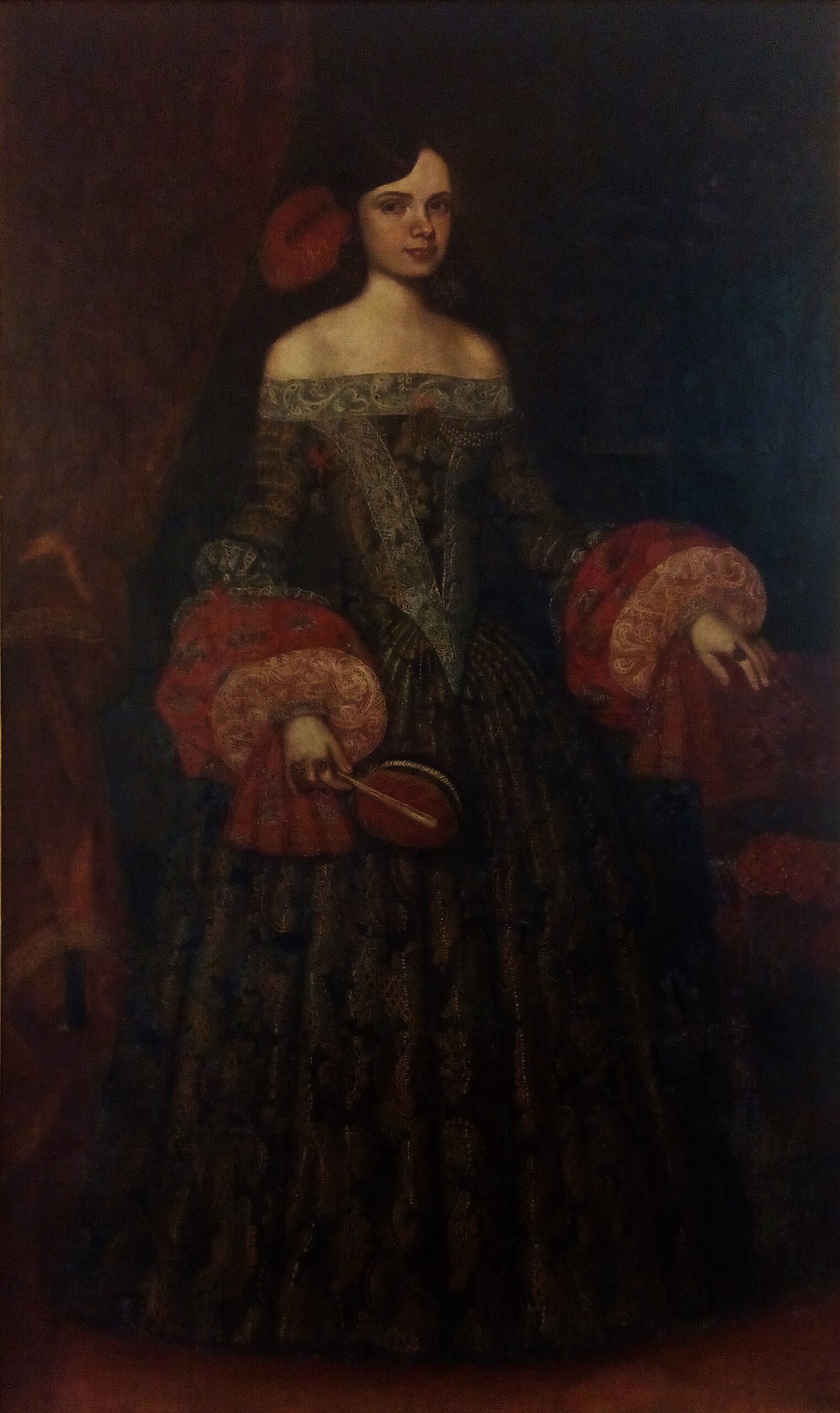
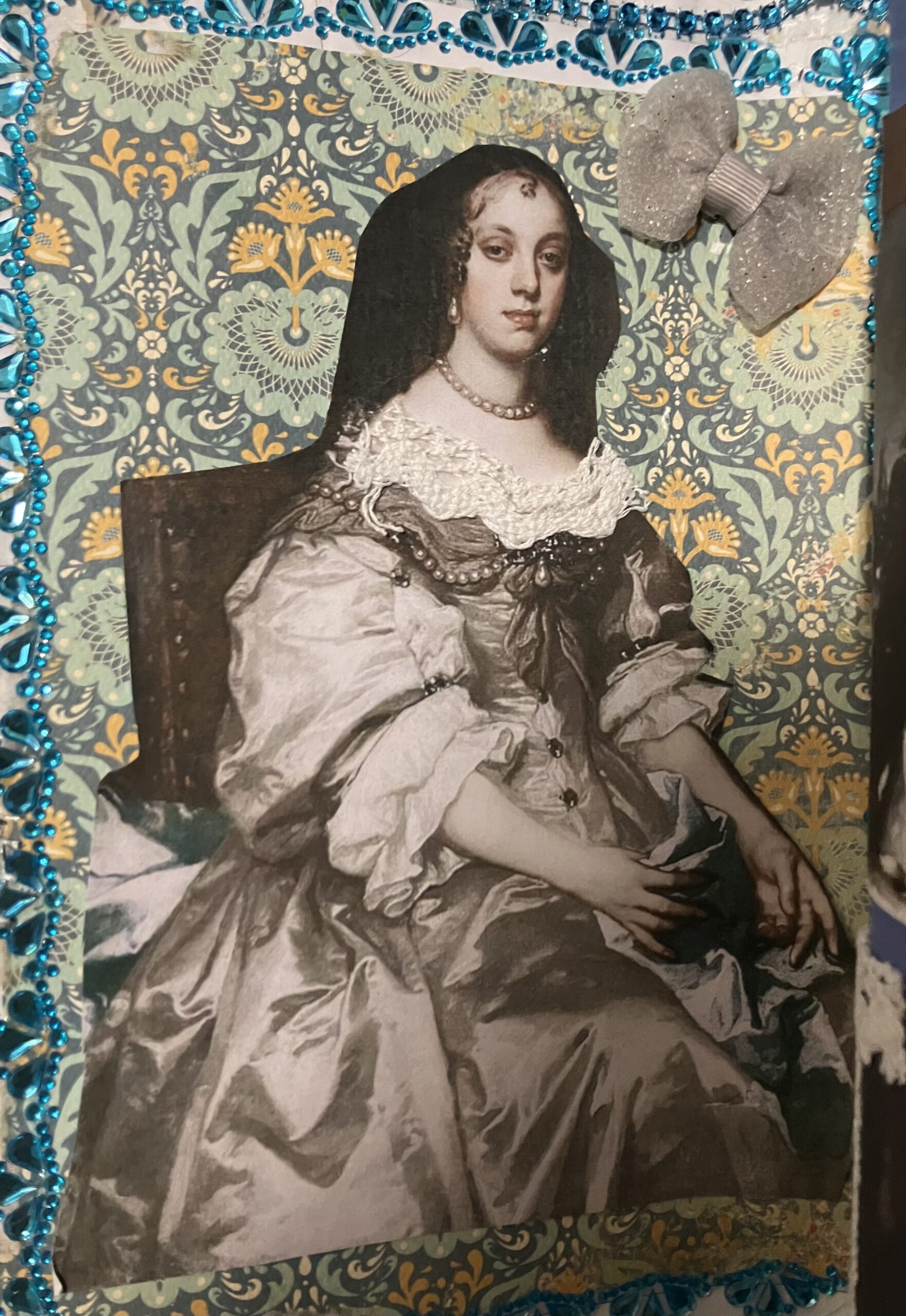
I came across a pic that’s identified as Catherine as a young woman. 

From Wikimedia Commons:

Portrait of D. Catarina de Bragança, Queen of England and Infanta de Portugal
“Painting of Catherine of Braganza, Queen of England and Infanta of Portugal, outside the Royal Pantheon of the House of Braganza, in the Monastery of Saint Vincent Outside the Walls, Lisbon, Portugal.”

Beautiful, but I had to change it.

Originally, I wanted to leave it as is, but I couldn’t tell what was her hair or the background. It drove me crazy. I tried to adjust the lighting of a copy but no deal. 

Still, I wanted to use it because it’s so pretty! My modern eyes see it as a being equivalent to a high school senior picture. Maybe it’s her before a homecoming dance or crowned Prom Queen.

So with nail polish, I hope I depicted an appropriate princess moment of the future queen of England.

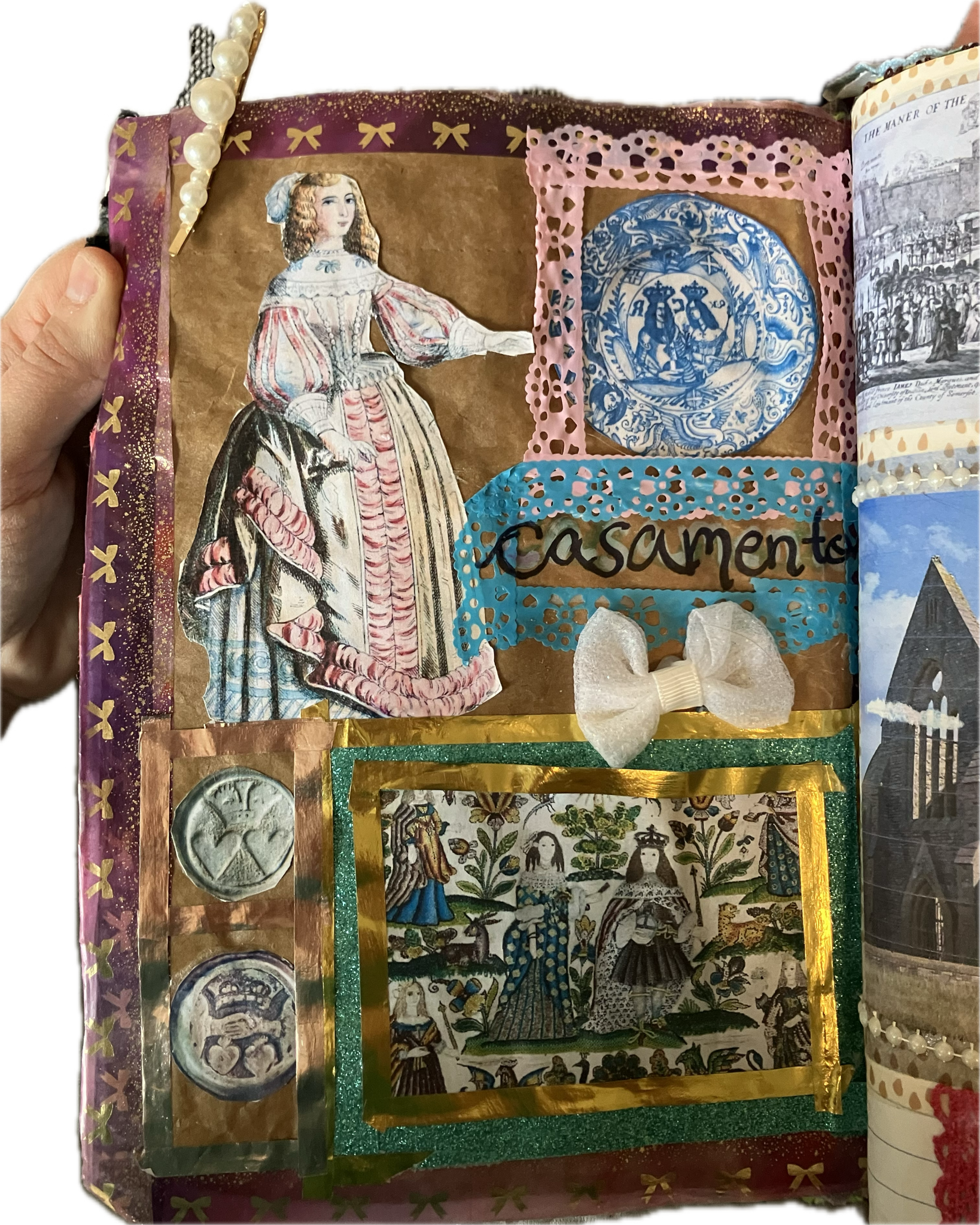
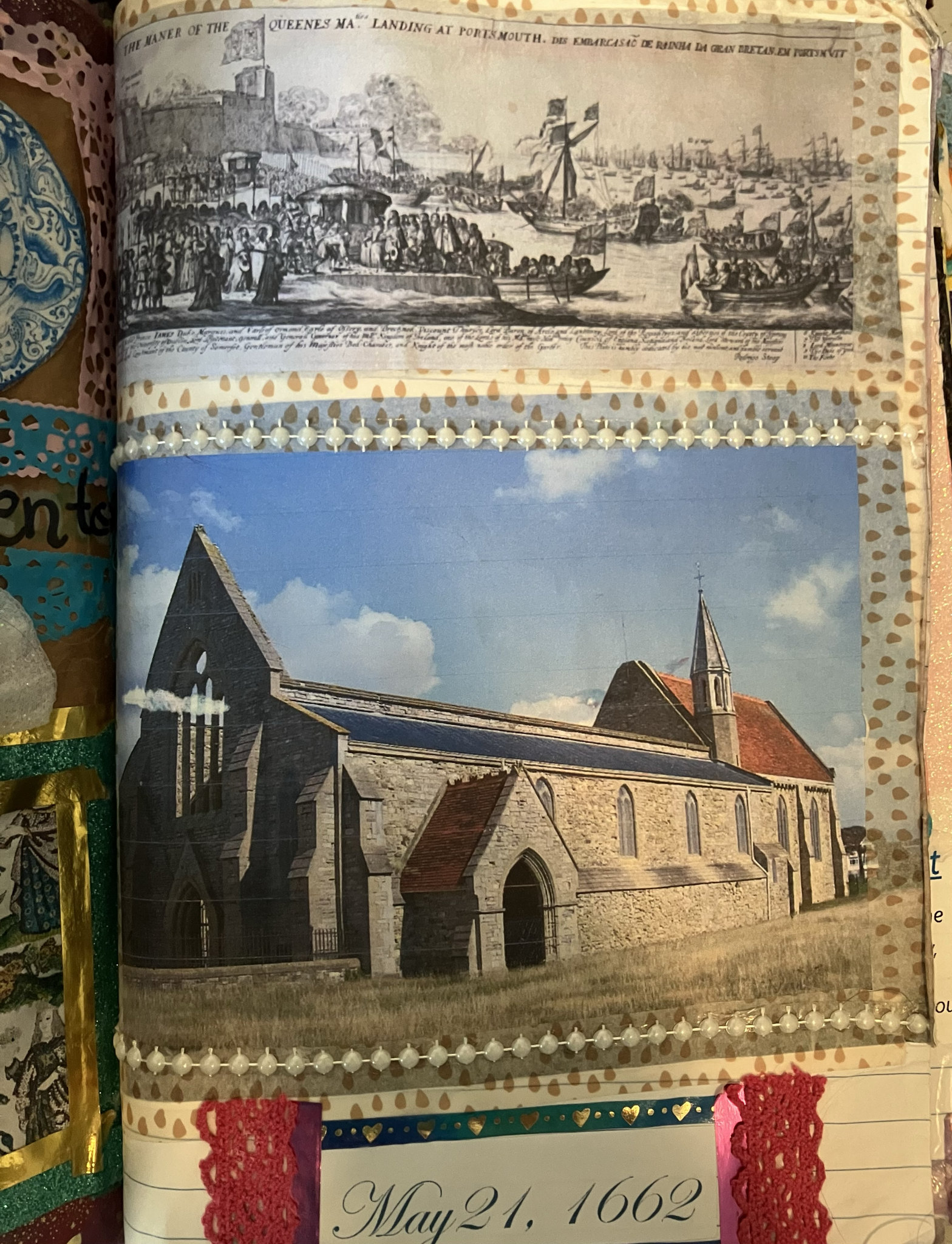
Catherine Collage Collection: It’s ROYAL Wedding Time!

The Portuguese Princess has landed! The King’s new consort! 

England has a new queen-and bride!!! 

Citizens were excited to know what she looked like. And many then-like now-were curious and love a royal wedding!

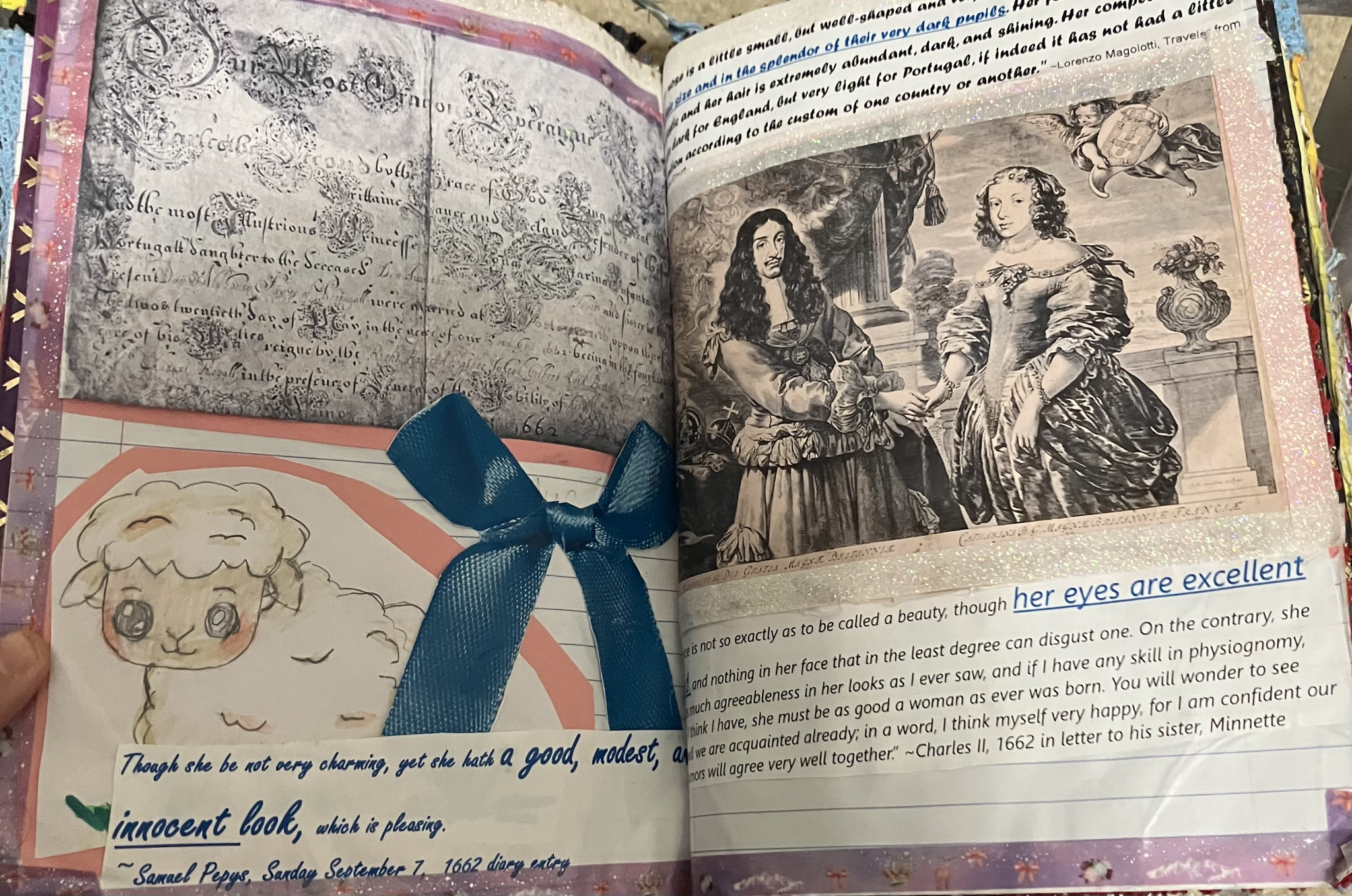
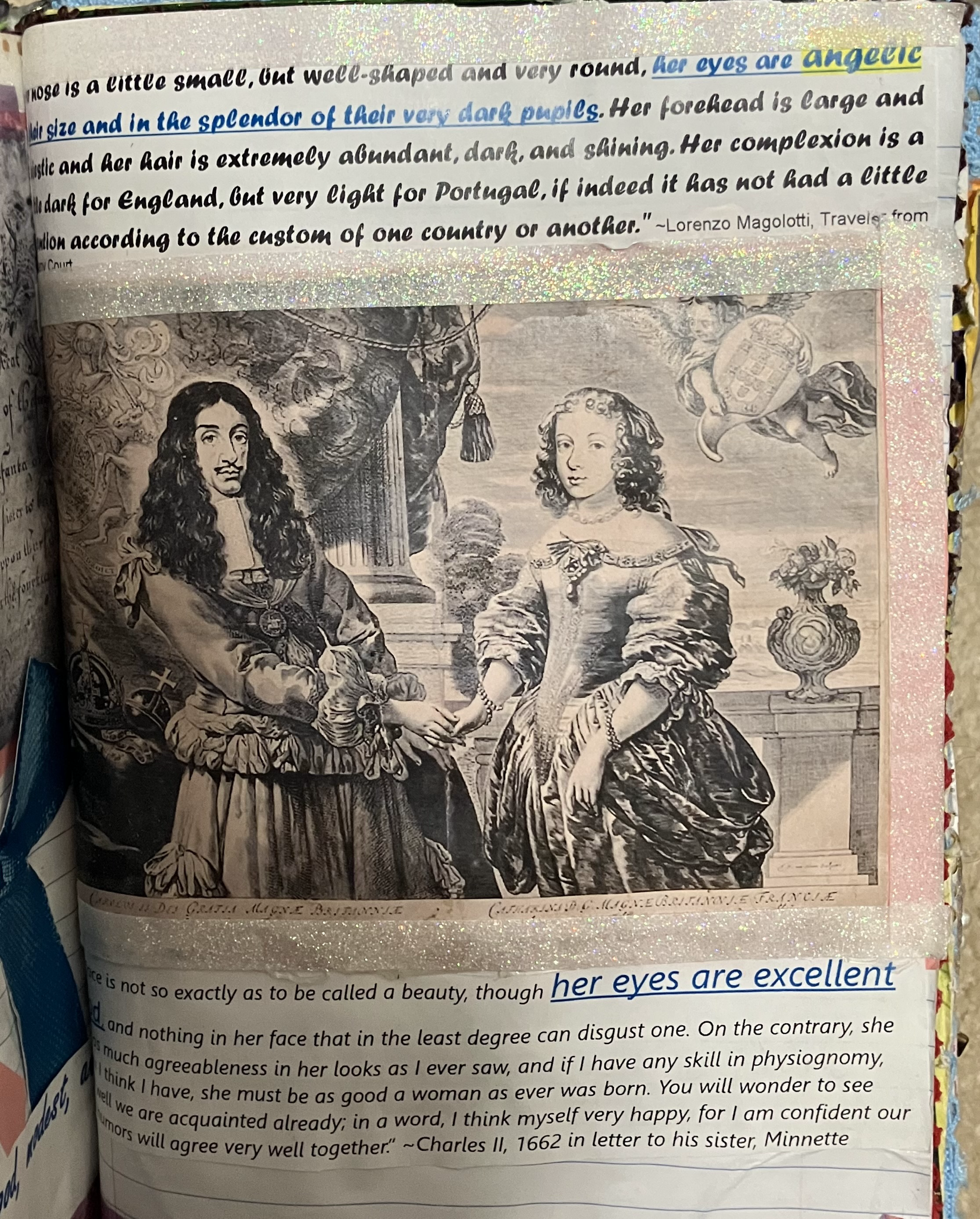
If you were close enough to witness the cute bride, you were gifted a bow from the bride’s wedding dress. What a wedding favor! (And a bit weird.)

Too bad for the country’s subjects (and the international wanna be viewers) that TV wasn’t invented yet to feel like you’re part of the wedding festivities! 

Though the new queen wasn’t the best looking in the room, she wasn’t ugly. I think she’s pretty, and the early pics of her in England are adorable! 

While I believe she was in a general a good person, her looks led some to underestimate her. A secret weapon. 

Throughout the collage book, I gave insight about the propaganda that was useful to Catherine. 

One thing that was involved in that propaganda-to her benefit and others’-were her angelic looks. 

My own belief is she continued to use her puppy dog eyes to sometimes manipulate and placate the King-especially when she was is in danger. 

Catherine’s Collage Collection

I speculate all the time what these biographical subjects would like or how they feel. I can’t stand to read a lot of that fluff though, but I thought I’d get out all my fluff in a book…

A glue book!

Or scrapbook…collage book?

Whatever type of book I put together is, it’s part of a genre I call speculative bio.

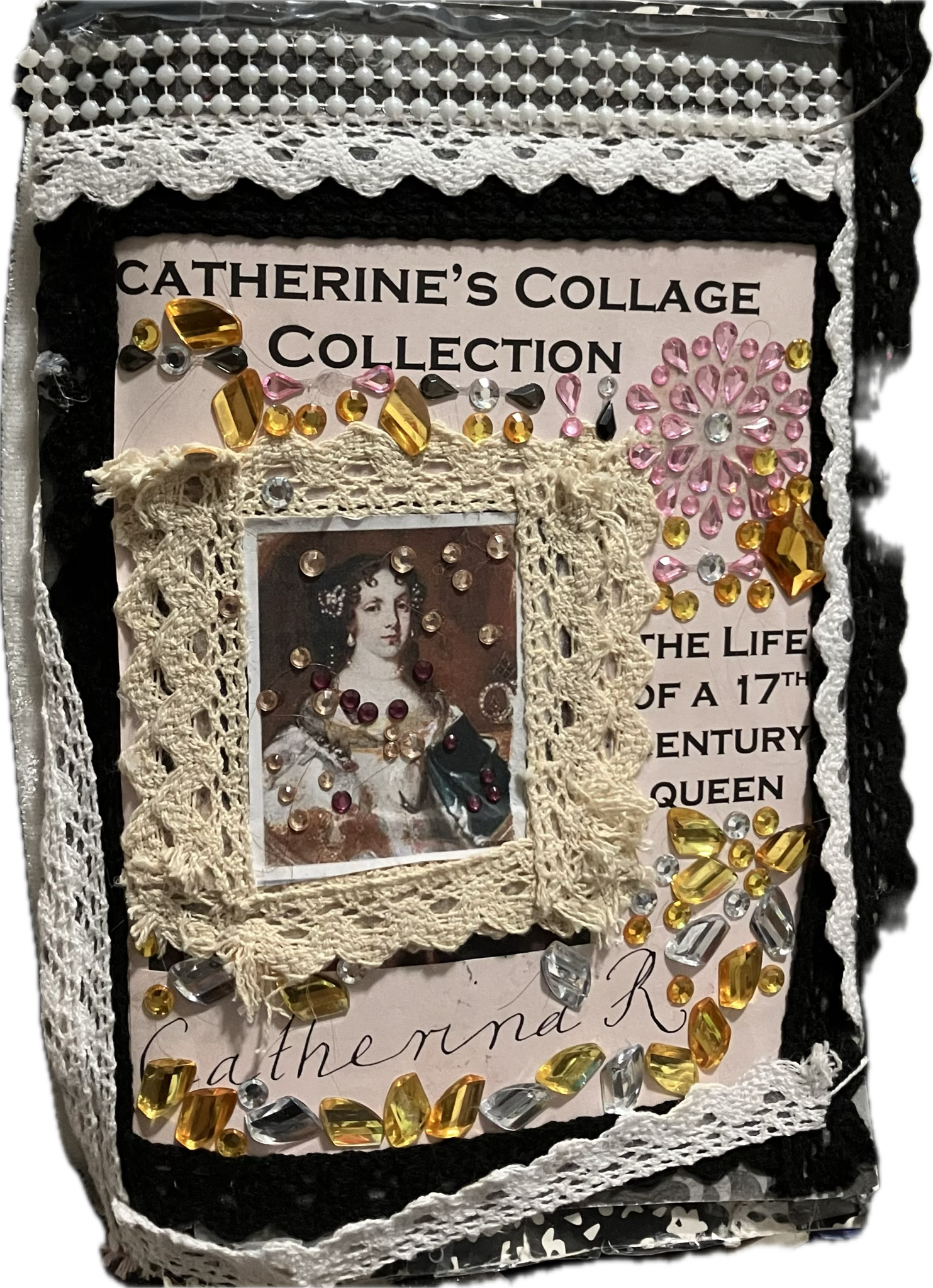
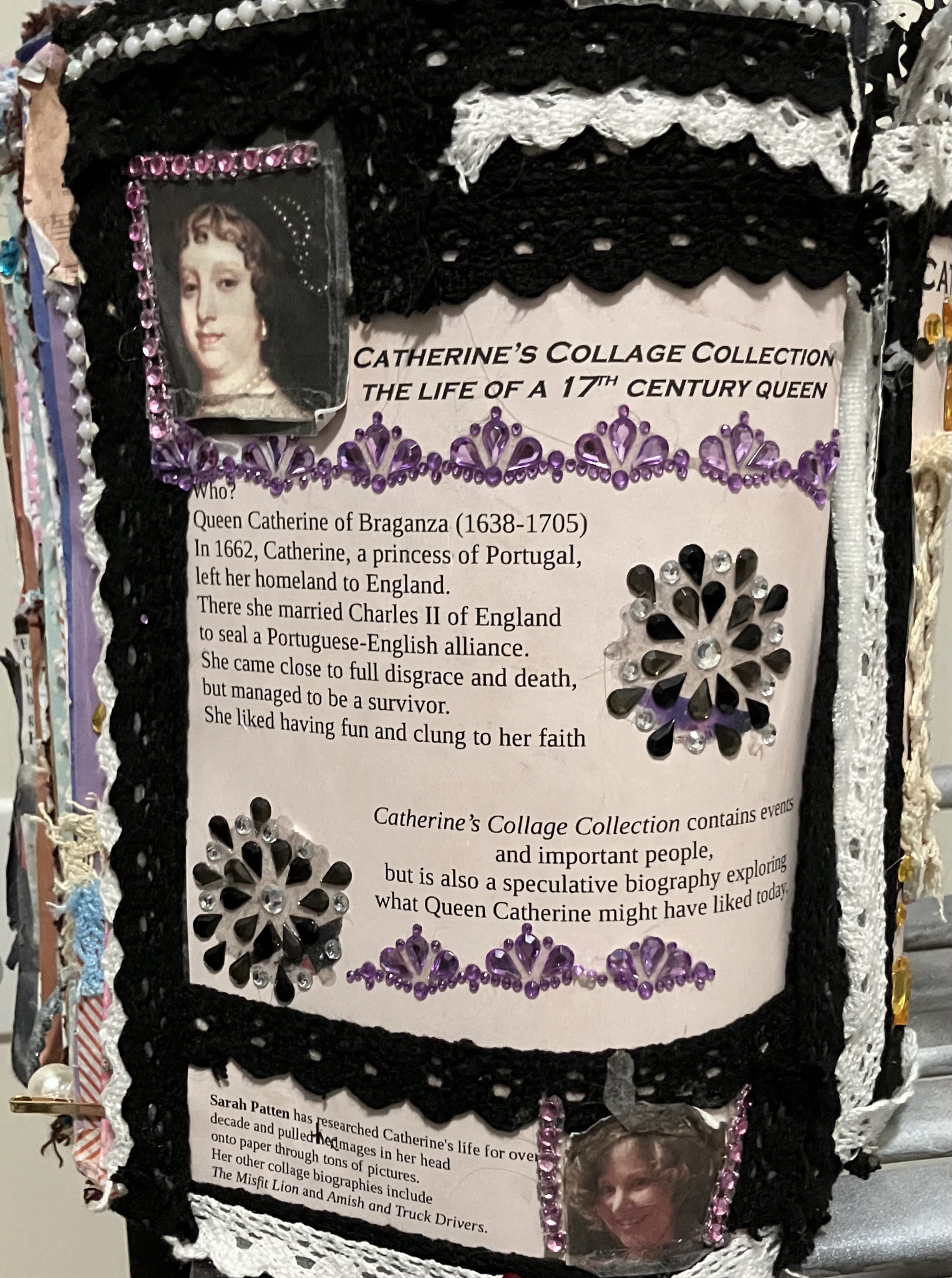
This book’s official title is called, Catherine’s Collage Collection: The Life of a 17th Century Queen.

The front and back:


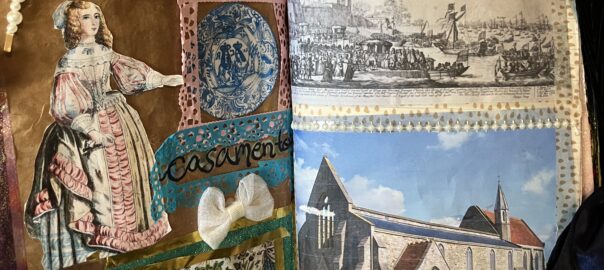
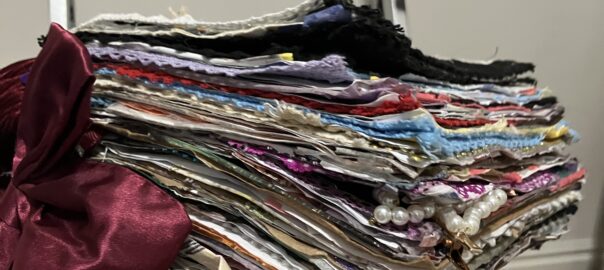
The literal base of the book is a composition book. The page trimmings I included were mainly lace, pearl, Washi and beads tapes. I used some scrapbook paper here and there. I’d include some stickers, very few magazines clippings, but I printed off the majority of the pictures myself. (SO many talented artists!)

The book can close thanks to velvet headbands with bows I attached to it. I also added pearl clips and bobby pins. These hair decorations were reflective as the types of outfits the Queen wore (the lace tape is also a callback to Catherine’s outfits, but that stuff was more pricey than the dollar store classy hair accessories!)

I expressed to a friend I probably have all my thoughts and speculations wrong. She pointed out that whatever the case, she was sure the Queen would appreciate the project.

So hopefully the 17th century Queen would enjoy it-and notice that I mindfully didn’t include flower embellishments. Too bad because I love flowers. Though Catherine of Braganza portraits feature flowers, she didn’t always appreciate them. I heard something about how her husband gave bouquets to his girlfriends, and flowers gave her some sort of PTSD. One could hardly blame her.

Though reading about that and her other trials make me so depress, putting together this book was a good antidote. It was actually both really fun and spiritual.

While I did this collage book for and of Queen Catherine, I got the feeling that things worked out for her.


Arranged: Catherine of Braganza and Charles II

Catherine and Charles’ marriage didn’t end in divorce, but it wasn’t exactly a success. The man had many mistresses before and during their marriage, but the couple stayed on somewhat good terms.

Would Charles’ character had been different if he hadn’t had access to so many women? If he lived today, would he had signed up for an addiction recovery program?

Catherine had admirers herself. One man got fired from her service for getting too close with her. After Charles’ death, there were rumors she had a relationship with a Frenchman who had served her for years.

Maybe the mothers would still have played an important part in matchmaking; only this time it would be for everyday life, not making alliances between two countries. The mothers of this couple were both Catholics. Charles’ mother was happy when her decided to marry a good, Catholic girl.

Once again, religion is an important factor. Charles declared himself a Catholic at the end of his life, which is what Catherine had been her whole life.

I don’t know if they would have picked each at an ordinary party, but their marriage probably would have been better if they hadn’t been in high positions where they had opportunities to interact with questionable characters and temptations.


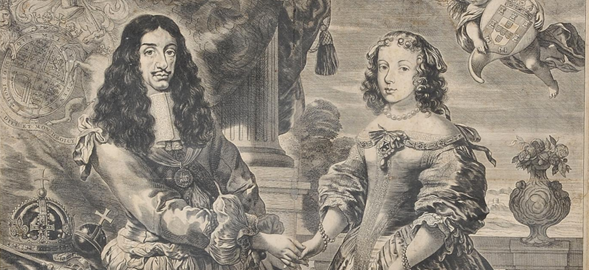
Featured Image: Charles II of England and Queen Catherine of Braganza (Dutch engraving, 3rd quarter of the 17th century)

Review of Catherine of Braganza: Charles II’s Restoration Queen

Thanks to Sarah-Beth Watkins’ Catherine of Braganza: Charles II’s Restoration Queen, we finally get a solid biography of the Portuguese princess turned queen of England.

As the title suggests, this biography mainly concentrates on Catherine’s years as queen consort to Charles II. However, Watkins does nicely provide a rare glimpse of Catherine’s life before her marriage and after the death of Charles II.

Catherine book

Whether it was the beginning, middle, or ending of Catherine’s story, a reoccurring theme is the difficulties of being a princess and a queen. Through good storytelling, this biography gives information about what real life is like for royal women. They constantly get judged publicly, have obligations to follow, and have to pick and choose their battles carefully. Watkins gives the valuable insight: “A princess, and often a queen, must do as she was told.”

A common hardship being married to a king is often his affairs. Catherine goes down in English history as a tragic queen who had to deal with a husband who womanized a lot. Far too often, though, I read books and blogs that describe Catherine being “desperately in love” with her unfaithful husband. Watkins doesn’t jump to that conclusion. Instead, she gives us stories in which show the tension and tenderness between Catherine and Charles. We also get more details of what Catherine did away from the royal court and Charles.

Catherine of Braganza: Charles II’s Restoration Queen is a valuable read. The more you get to know this queen, the more you agree with the observation of Minette, Charles II’s sister, about Catherine: “It is impossible not to love her.”

flower-148574_960_720

Link:
Catherine of Braganza: Charles II’s Restoration Queen

Michal: Reacting to Wives, Concubines, and Children

Before Michal returned to David, she probably had some sort of knowledge that David took on more wives. Perhaps Abner filled her in on more details on their way to Hebron. Accepting or not, nothing could have fully prepared her to be in the presense of his other families.

David’s wives are  obviously one of the hurtful aspects of her return. They had children which gave their positions a boost. It would have been humiliating if she was asked to acknowledge the wives and recognize their children as David’s heirs.

Reactions of Royal Women

Traditionally, royal women have been expected to turn a blind eye to their husbands’ other lovers. Some were forced into associating with them. And it’s typical for the strong ones to take a stand. Here are some examples.

Catherine of Aragon
425px-CatherineAragon

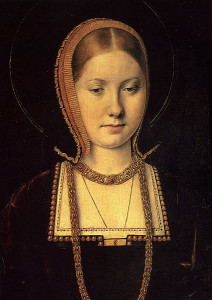
Catherine of Aragon usually turned a blind eye to her husband’s affairs, but there were times she felt it necessary to stand up to him which shocked him. Even before Anne Boleyn, she showed disapproval when Henry recognized a illegitimate son at court. That mistress was dismissed. When the Anne Boleyn burden did arise, Catherine would always consider herself to be the king’s true wife and called herself “Queen” till her death.

Anne Boleyn
Anneboleyn2

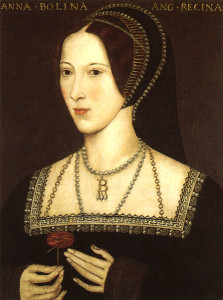
Anne Boleyn lashed out more than Catherine  about Henry’s affairs. With the assistance of her family, she made sure one of his mysterious mistresses didn’t return to court. I’m not a fan of her, but I think she was showed the dignity of a queen when she went to the executioner’s block.

Catherine of Braganza
Queen Esther and Queen Catherine of Braganza both had similar, selfless agendas

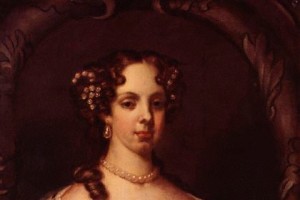
Before Catherine of Braganza married Charles II, she was informed of his affairs. She was also advised not let his head mistress into her presence.  But when that did happen, she got a bloody nose and fainted.   She improved restraining herself from making scenes in public. Once in a while, the mistresses made good allies, which put her more in favor with her husband. She even was on good terms with the mistresses’ children but never acknowledged them as his heirs.  She stayed queen consort and her husband asked for her forgiveness on his deathbed.

Problems With Approved Polygamy

I have not forgotten about how David’s marriages were approved by God at this time. That would have presented unique challenges and made it more difficult. Even the most righteous women in the Bible struggled with their husbands having other wives and concubines which bore them children.

Rachel and Leah
Dante's_Vision_of_Rachel_and_Leah

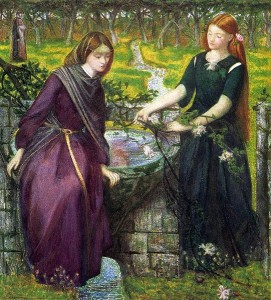
Childen made a woman more valuable in ancient Israel. Leah thought Jacob would love her when she bore him sons. Then there’s younger sister Rachel, who’s barren but still Jacob’s true love. Rachel desired children so badly. When Rachel asked Leah for mandrakes (considered a fertility drug), Leah said, “Is it enough you have stolen my husband?” (Genesis 30:15)

Who did Michal relate to most in this case? Did she feel like the other wives stole David? Could she also have wanted children more than anything? Leah and Rachel’s stories both have a somewhat satisfying ending. Rachel bore Jacob his favorite sons, and Jacob requested to be buried with Leah. It seems non-royal families have a better chance at happy endings than royal ones.

Hannah and Peninnah
800px-Hannah_VICTORS,_Jan

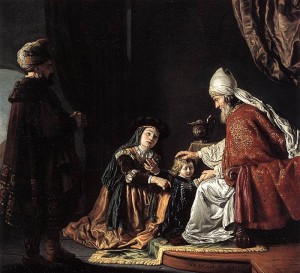
The prophet Samuel was the product of a woman with great faith who had been barren for years. Hannah felt low as her husband’s other wife , Peninnah, produced many children, yet her husband, Elkanah “loved Hannah” (1 Samuel 5) and tried to comfort her “Why is thy heart grieved? Am not I better to thee than ten sons?” (1 Samuel 1:8) Through Hannah’s faith she eventually conceived a great prophet and other children followed. Maybe David attempted to reassure her with love but there’s the question if David even wanted to have children with Michal due to a desire to prevent Saul’s descendants from inheriting the throne. With all his other wives, it was easy to avoid her. There wasn’t that much communication.  Also, the rulers that married off their daughters to David might be suspicious if he gave the daughter of a rival king (even if he was dead) more attention.

Sarah and Hagar
Tissot_Sarai_Sends_Hagar_Away

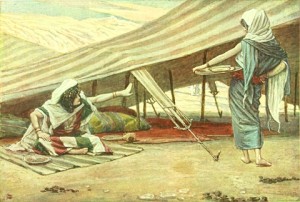
According to Sarah, Hagar disrespected her: “She had conceived, I was despised in her eyes.” (Genesis 16: 5)Abraham let Sarah “do to her [Hagar] as it pleaseth thee.” Sarah might have been too harsh as Hagar ran away. Hagar she was still promised posterity, But it was Sarah who eventually bore Abraham’s son of the covenant. She was concerned that people would think Hagar’s son, Ishmael, was Abraham’s heir and not her son, Isaac. Sarah advised Abraham, “Cast out this bondwoman and her son; for the son of this bondwoman shall not be heir with my son, even Isaac.” (Genesis 21:10) Abraham took his what his wife said to heart and asked the Lord what he should do. The Lord agreed with Sarah, and the next morning, he sent Hagar and Ishmael off with sufficient supplies. (Genesis 21:11-14).

Sarah’s request was granted but royal women don’t always have the opportunities. Sometimes  king’s mistresses do fall out of favor much to his queen’s delight. Since many of David’s wives were prominent women, the chances of sending them away were slim. Michal was the first wife but had little power to pull off something like Sarah. If David sent away another wife who was the daughter of a king, alliances would be broken which would present problems such as the threat of war. The most powerful members in Michal’s family were dead. Yet, some of his wives were low born. Michal might have considered them bondwomen like Sarah saw Hagar.

The Ticking Time Bomb

Michal survived Hebron. But when the royal family changed their residence to Jerusalem, things became shakier.2 Samuel 5:13 practically yells Michal had a problem with the move and David’s further actions:

“And David took him more concubines and wives out of Jerusalem, after he was come from Hebron”

So David had more children, wives, and concubines. This was bound to create more conflict and competition among the other wives too (2 Samuel 5:13-16). Who knows if she and the other wives conspired with or against each other Maybe Michal felt she had more power over the concubines, but was getting the impression she held little value to David. This was the perfect setup for he next chapter–their public spat after a controversial celebration. David taking on more wives, concubines, and having children was traumatic and contributed to that fight. There might have been individual incidences that left Michal shaken. I wouldn’t have been in the mood to celebrate.


Sources:

Catherine of Aragon: The Spanish Queen by Giles Tremlett
The Anne Boleyn Collection II by Claire Riidgeway
Jane Boleyn: The True Story of the Infamous Lady Rochford by Julia Fox
“Keeping Up Appearances: Catherine of Braganza, Charles II’s Underestimated Wife” by Sarah Patten

Genesis 16, 21, 20
1 Samuel 1
2 Samuel 5

Images:
Catherine of Aragon  by Michael Sittow
Anne Boleyn portrait
Catherine of Braganza  Jacob Huysmans
Dante’s Vision of Rachel and Leah by Gabriel Charles
Hannah Giving Her son Samuel to the Priest by Jan Victors
Sarai Sends Hagar Away by James Tissot