Category Archives: French Revolution

Poet Profile: Princess Marie-Therese of France

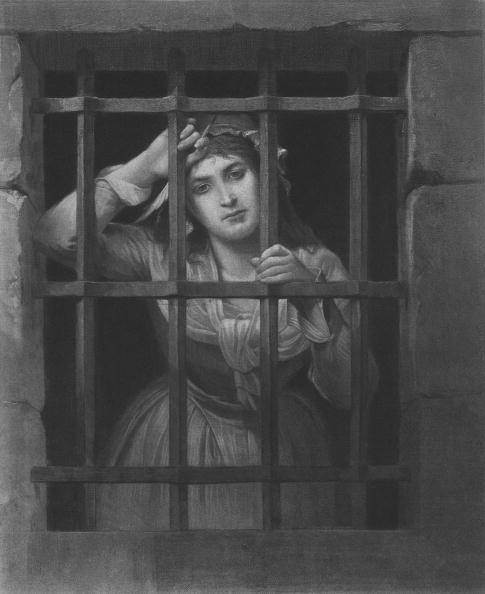
Marie-Therese did not like to think of the time she spent in the cell and would not like to be remembered for being a prisoner in it for so long. Hopefully, she wouldn’t mind being regarded as an example on how to deal with loneliness and painful circumstances.

In an earlier article, I wrote about her aunt Elisabeth helping her find ways to cope and what to do when she was completely alone. Her aunt advised her to keep quiet around guards, When Marie-Therese was alone and needed to voice her frustrations, she turned to writing. Writing was a means of survival. She called herself “the most unhappy creature in the world.” No matter how depressing her writings, writing kept her from going totally insane.

Reading Treasures: A Retreat for Everything Marie Antoinette  included a translation of some of Marie-Therese’s poetry in their post called  “I was your king’s daughter:the poetry of Marie Therese Charlotte in captivity” Her poem “I Was Your King’s Daughter” was found in a book kept by  family of Madeleine Bocquet-Chanterenne. The translation in English reads:

I was your king’s daughter
separated from all my family.
I languish in this sad jail
Alas! I say with good reason
Even though I am alone and sad
My jail would appear happy to me
If I was in this place with my brother.
To my mother, to the Conciergerie
I asked to be reunited
But as an answer, my jailers
Say: this has nothing to do with us.
Spread your blessings on her,
God! Open promptly your jail.
A short time ago, at night
I was sleeping peacefully in my bed.
I got suddenly woken up
By the enraged noise of my locks.
They were coming to my door, they were knocking.
I replied immediately: who is there?
I was asked to open up, I replied:
I am getting up and leaving my bed.
I was hoping that I would get out,
I was expecting to leave the tower.
I go to the door, I finally open it!
They come in with my jailer
I look at them, hoping they would ask me
to follow them and come.
But alas! They stare at me
And suddenly without saying a word, they go out with my jailer.
This poem makes me want to go back in time and say to the teenager that she’ll make it out alive. It was a horrible ordeal but she kept fighting.
This poem also shows it’s important for schools to let their students write poetry. I taught a little English class after school. There was so much material that needed to be covered, I didn’t think about poetry that much. After the last day (when the students actually wrote a poem), I regretted that I hadn’t incorporated  more poetry into the lessons.  Writing poetry wasn’t an academic requirement but I think it would have helped the children more with problems outside of school.
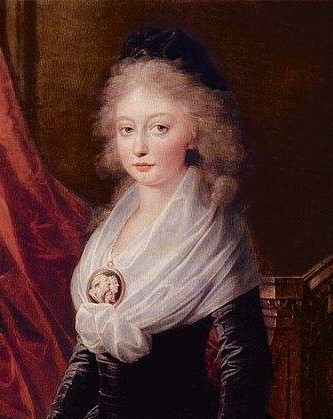
Portrait of Marie Thérèse of France (1778-1851) by Heinrich Fuger 
The sole survivor.

Portrait of Marie Thérèse of France by Heinrich Furger.

Marie Thérèse and Aunt Elisabeth

French Revolution. What comes to mind?

Madam Guillotine,  Marie Antoinette, and sink me–The Scarlet Pimpernel. The 1982 film adaption of the book made me laugh so hard. I was also in awe. Did such heroes exist?

There were those who smuggled nobles into other countries. The films shows that Marie Antoinette and Louis’s son survived and was taken from their prison to a safer place.

Wrong.

The sole survivor was the king and queen’s daughter, Marie Thérèse. who clung on to some hope that maybe her brother and mother who were taken away had survived.

I can’t believed I went on for years not knowing about her–or her aunt Elisabeth, the king’s sister. Elisabeth made sacrifice after sacrifice for the royal family–refusing to marry or take other available routes that would take her out of the country. She endured violent attacks with them and even posed as the queen to buy her sister-in-law more time during one ambush. It’s little wonder that Marie Antoinette and Louis counseled their children to listen to their aunt.

All too soon the royal family was taken to the Temple Tower. They endured unfair trials and living conditions grew worse. The king was executed and little Louis was taken to a separate cell. Marie Antoinette was taken away and also executed, but Elisabeth and Marie-Therese only knew the king’s fate. However, I believe Elisabeth knew her sister-in-law was dead and had a strong feeling her nephew was slowly dying. Marie Thérèse had the best chance of surviving.

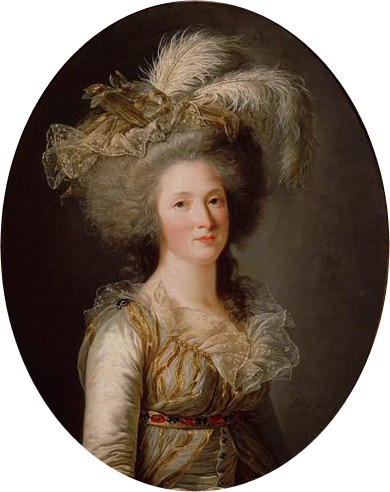
The Heroic Aunt

The heroic aunt. Elisabeth de France by Vigee-Lebrun.

 
When it was just Elisabeth and Marie Thérèse in the cell, Elisabeth comforted her niece. She was an example of piety, and Marie Thérèse said much of her survival was due to prayer. Elisabeth showed and advised her niece on how to groom herself, keep the cell as clean as possible, and how to handle the guards. It was just a matter of time before Elisabeth was taken away and was prepared to die a martyr. Marie Thérèse would not find out what happened to her aunt, mother, and brother till much later. The information that her aunt watched around twenty-five nobles executed before her and was purposely saved for last would be withheld.

Marie Thérèse was eventually freed and taken to Vienna in 1795 for safety.

The sole survivor. Portrait of Marie Thérèse of France by Heinrich Furger.

The sole survivor. Portrait of Marie Thérèse of France by Heinrich Furger.

Marie Thérèse would go on to help royal refugees and raise troops against Napoleon dubbed her the “only man in the family.” She worked hard to preserve the memory of her family. The following comment about her aunt Elisabeth needs to be remembered.

“I feel I have her nature . . . [she] considered me and cared for me as her daughter, and I, I honored her as a second mother.”

I hope I have some of Princess Elisabeth in me. Her story sticks out to me. In times of tough decisions, I have thought of my role as an aunt. Princess Elisabeth is a wonderful role model.  Her story is inspiring because it can make us think of ways we can be more loving toward our families.