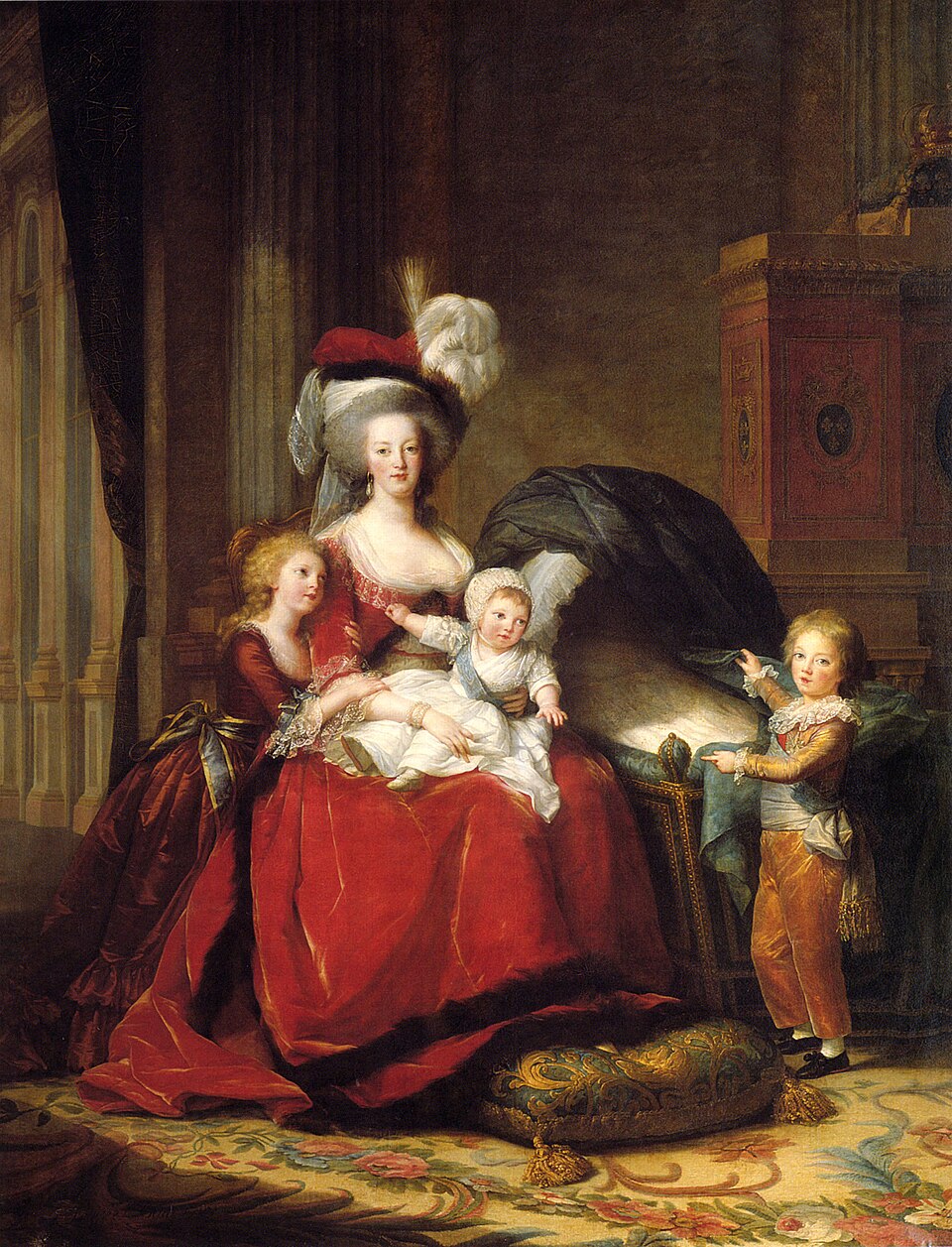
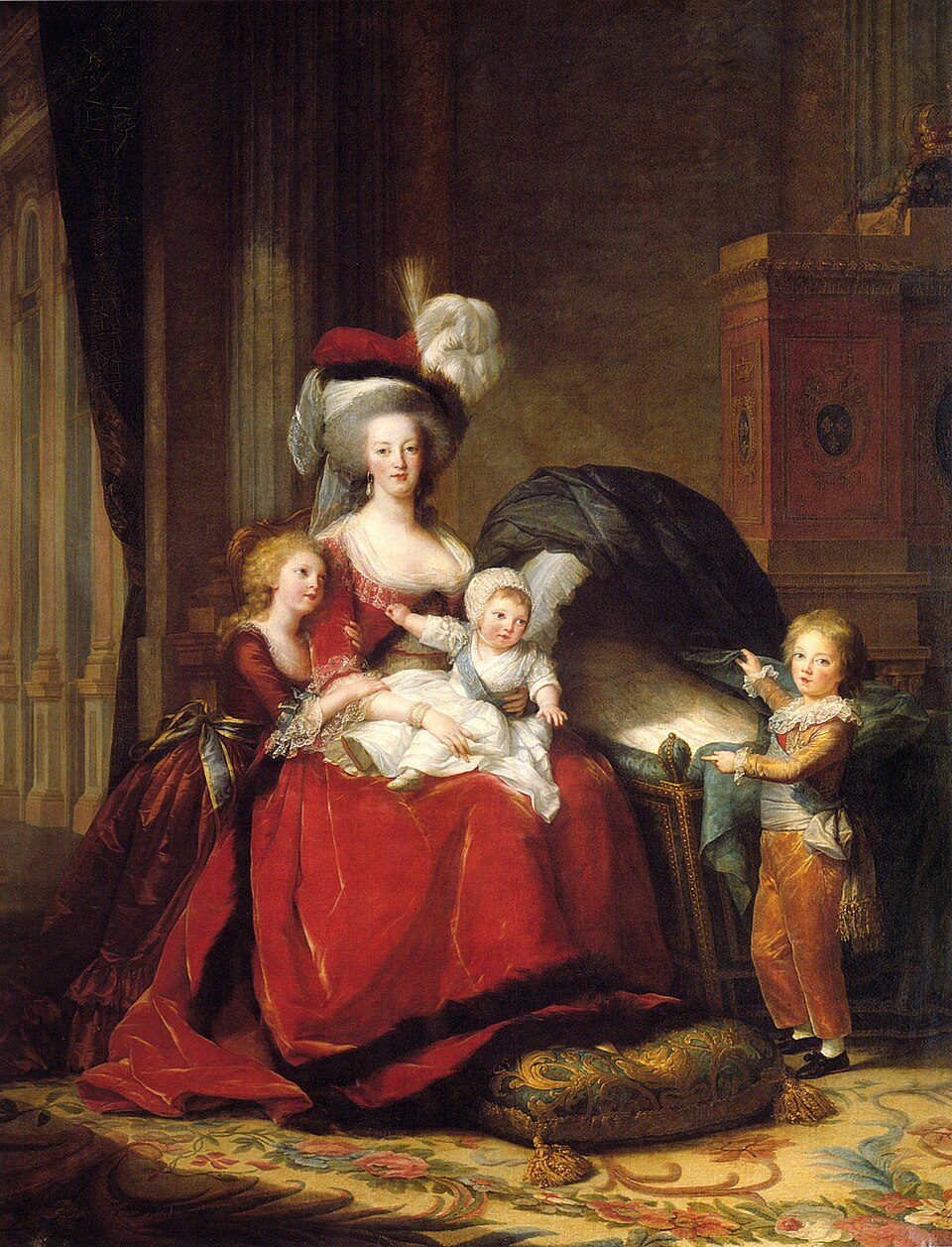
Marie Antoinette and Children, also called Marie Antoinette of Lorraine-Habsburg, Queen of France, and Her Children, was painted by Élisabeth Vigée Le Brun in 1787 and is still used quite a bit in teaching about the French Revolution time period and Marie Antoinette herself. While I’ve always appreciated it as a great art piece, I got bored of seeing it in so many places. It’s beautiful and grand, and her daughter looking longingly at her mother is a little over the top. However, when I learned more details about the painting recently, it became a lot more interesting!
A Daunting Task
Élisabeth Vigée Le Brun had great respect for Marie Antoinette. She started painting her in 1778. They sang duets as the Queen sat for portraits, and both valued motherhood.

In fact, when Le Brun had been pregnant and dropped her art supplies in front of the Queen, she was shocked when the Queen helped her pick up the supplies.
Marie Antoinette was a constant victim of libel, but when Le Brun was approached to make paint a state-type portrait, the Queen’s reputation had recently become more tarnished by the Affair of the Diamond Necklace. (An event where the Queen had been falsely accused of buying–but refusing to pay for–a very overpriced and tacky piece of jewelry.) It was a scary time for the Queen and those associated her. Getting people to see a woman who was a queen and loving mother was no easy task given the circumstances.
The Dress
Marie Antoinette’s red dress is bold but also is a throwback to certain portraits of saintly women.
The first saintly woman is the mother of mothers–Mary, the mother of Jesus.
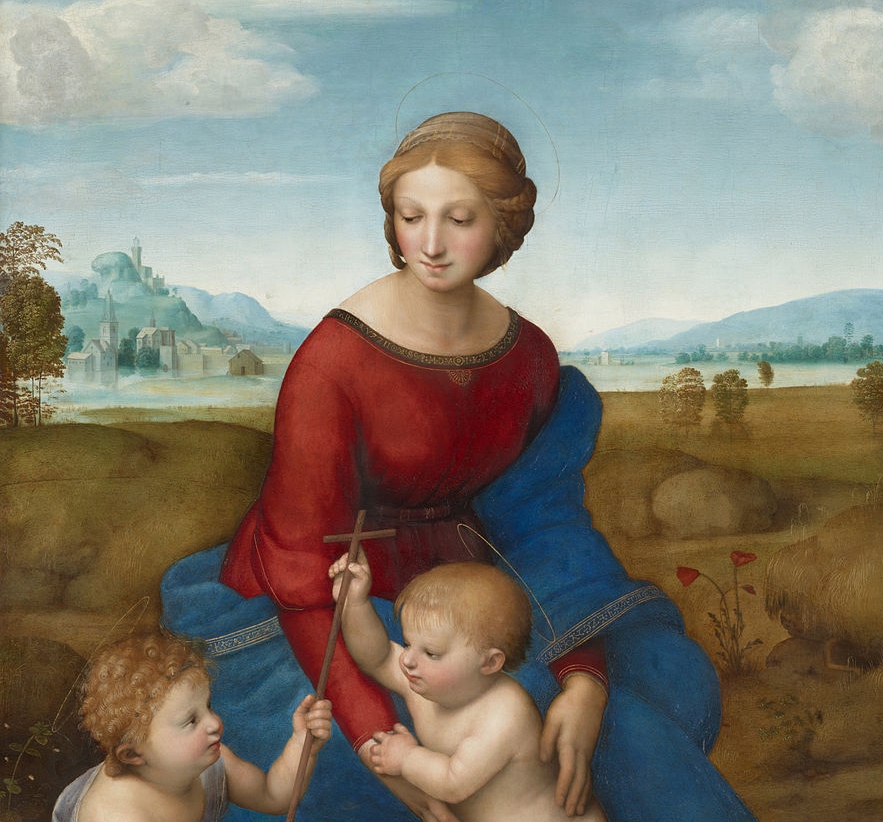
Madonna of the Meadow-once known as Madonna with the Christ Child and Saint John the Baptist, 1506 by Raphael.
Then a tribute to Queen Marie (Marie Leszczyńska–her husband’s grandma), who was known for her piety.

Portrait of Marie Leszczyńska, 1748, by Jean-Marc Nattier
Featured Jewels
Simple pearl earrings are the only jewelry the Queen is wearing–despite the big jewelry in the corner that I hadn’t noticed before I researched this painting.
The jewelry box is present but hardly noticable. Marie Antoinette’s real jewels were her children.
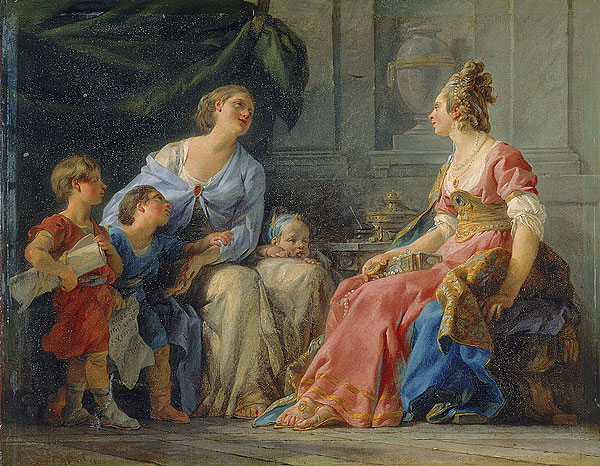
This is reflected of a woman named Cornelia who lived in ancient Rome and mother of the Gracchi brothers. When her friends asked about her clothes and jewelry, she showed her children and answered, “Haec ornamenta mea,” translated into:
“These are my jewels.”
Reception
The reaction to the painting was mixed. Her friends and brother told her the painting would receive “universal acclaimed.” It’s true—as mentioned before, it seems like it’s almost over used. But it’s easily recognizable and will continue to be used as a featured image in educational materials as well as merely showcased.
Going back to the time the painting was completed, it was showcased prominently in Versailles. However, it was moved to a less frequented place after the death of the Queen and King’s oldest son, Joseph (who’s pointing to the empty cradle of his deceased baby sister, Sophie) out of grief. (Marie Antoinette let Le Brun know about the action.)
Knowing the backstory–and the fates of those in the pictures–is heartbreaking and moving.
Hopefully, more people will know of the significance of the painting. If anything, may generations know that Marie Antoinette’s children were truly her most valued jewels.